Could Fly Ash Really Be America’s Rare Earth Backup Plan?
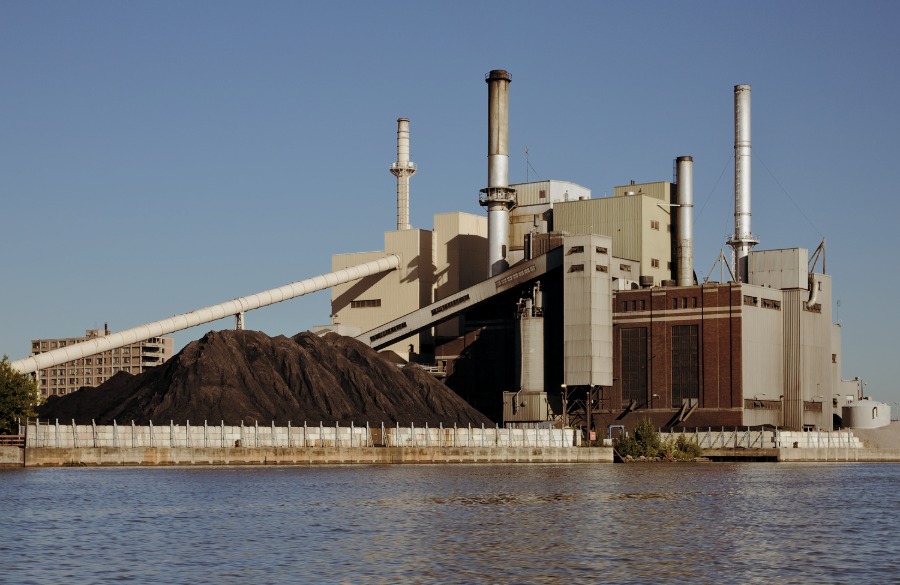
Fire 'em back up. (Adobe)
Every now and then something crosses my screen that stops me mid-scroll. This week it was an argument that coal fly ash might help break China’s chokehold on rare earth elements.
It is not a bad thought. There is real merit in it.
When China tightens control over a material, the United States usually responds. We have seen this play out more than once. In 2010, when China squeezed the rare earth market, the United States and Japan pushed back through the World Trade Organization. They also launched new mining efforts. In 2023, when China restricted graphite exports, American companies moved quickly to boost domestic production. When China limited gallium and germanium, U.S. semiconductor suppliers ramped up recycling and secured new sources. Pressure tends to wake up our innovation engine. This story fits that same pattern.
But before we call this the next big American turnaround, it helps to slow down and look at the realities from the concrete world.
First, fly ash is not a filler. The article I read used that word, but that misses the point. Fly ash is a supplementary cementitious material. It reacts chemically in concrete. It can replace cement. Under the right conditions, it can improve strength and durability. But that depends heavily on the quality of the ash and the mix design. It is not a guarantee.
And we are already short on it. Coal plants are retiring. Supply is shrinking. Departments of Transportation still specify it. Ready-mix producers rely on it. A lot of the reclaimed ash coming out of legacy ponds needs heavy processing before anyone can use it.
It is also worth remembering why fly ash became so popular in the first place. It was cheaper than cement. It lowered cost. It performed well when used properly. If rare earth extraction creates a new demand stream, that cost advantage will disappear. Concrete producers will feel that quickly.
Now look at the ash ponds themselves. People like to imagine clean, uniform stockpiles waiting for the right technology. That is not reality. Ash ponds are messy. They were built over decades. In EP #065 of the Concrete Logic Podcast, cement expert Peter Paone explained exactly what happens in those ponds. The chemistry changes constantly. It depends on the coal seam, the boiler type, and how the plant was run that day. Workers tossed gravel and plywood on top of the sludge so they could walk across it. Moisture shifts from one scoop to the next. Carbon levels swing. Particle sizes vary.
It helps to understand what is actually sitting in these ponds. When coal is burned, most of the material disappears. What stays behind is the concentrated mineral fraction. That includes some things people want and some things nobody wants.
The good stuff people are after:
- Neodymium
- Dysprosium
- Praseodymium
- Yttrium
- Other rare earth elements
These are used in magnets, motors, electronics, and defense systems. This is what makes fly ash interesting to the rare earth world.
The bad stuff that tags along:
- Mercury
- Selenium
- Vanadium
- Arsenic
- Lead
- Cadmium
These are the nasties. They were concentrated in the original coal and get concentrated again in the ash. They create the environmental and handling headaches.
Both groups come packaged together. And that is the challenge. If someone wants the rare earths, they also inherit everything else in the ash. That means real separation, real cleanup, and real cost before any rare earths leave the site.
One should also consider what happens if fly ash starts flowing into a new national supply chain. Fly ash supports Department of Transportation mixes. It supports mass concrete. It supports everyday ready-mix production. When supply tightens, concrete costs rise. Availability drops. Mix designers get pushed into adjustments no one wants to make on the fly.
None of this kills the idea. The United States can solve supply chain problems when we put our mind to it. Fly ash does contain valuable elements. The opportunity is real. And national pressure tends to spark innovation.
But we need to be honest about what fly ash actually is. It is not uniform. It is not clean. It is not sitting there unused. The variability is real. The heavy metals are real. The processing challenges are real.
There is potential here. There is also risk. And this development will be something to watch.

Seth Tandett is as solid as the concrete he works with. Based in Richmond, Virginia, he’s been part of teams delivering top-notch structural concrete work across central and southern Virginia—everything from multi-level frames to data centers and federal facilities.
These days, Seth drives business development at Baker Construction while hosting the Concrete Logic Podcast, where he cuts through the noise and gets to the truth about what’s really happening in the concrete industry.
When he’s not chasing projects or hosting the show, you’ll find him studying economics, digging into American history, or sitting in a duck blind waiting on the next flight of birds.
Tune in to the Concrete Logic Podcast and you’ll get exactly what Seth’s known for: sharp questions, blunt commentary, and real conversations about concrete. No spin. No fluff. Just the stuff that matters.

Winning the Game, Losing the Player