The Hidden Reasons Concrete Feels More Expensive Than It Should
Concrete didn’t become the default building material because it was fashionable. It won because it made sense. It was durable. It was local. And for a long time, it was the economical choice when you looked at the whole building—not just one line item.
So when concrete gets labeled as “too expensive” today, it’s worth asking a better question.
Is concrete actually the problem?
Or is it everything wrapped around it?
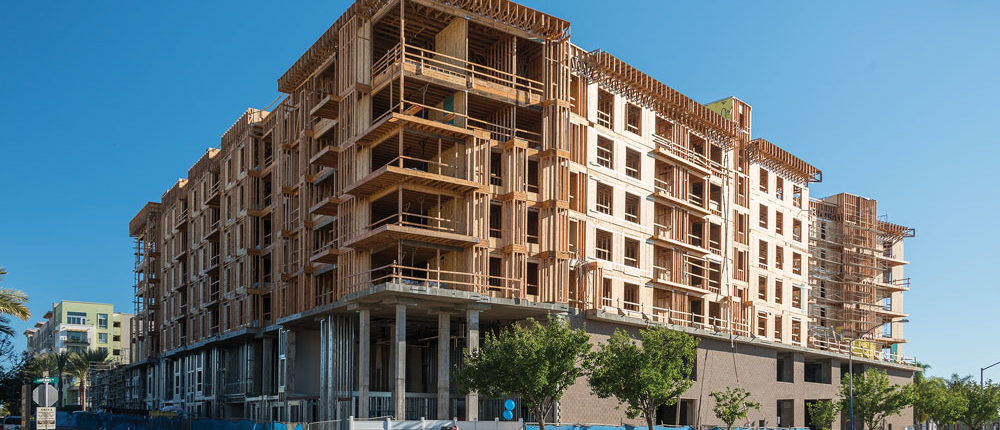
If you’ve spent any time walking jobs lately, you’ve seen the result of that question play out in real time. Two levels of concrete. Five or six stories of wood stacked on top. Everywhere. Multifamily, mixed-use, even buildings that not that long ago would have been all concrete.
Architect Duo Dickinson calls this out directly in his article, The Architectural Pandemic of the Stick-Frame-over-Podium Building.
What makes his piece interesting isn’t that he’s arguing for concrete. He’s not. He’s pointing out how often these buildings aren’t the result of design intent at all. They’re the result of cost pressure, code minimums, and a system that quietly nudges projects toward the same outcome over and over again.
That should sound familiar.
Most discussions about concrete cost fixate on price per yard. Cement content. Admixtures. Freight. All important—but none of those exist in isolation. Concrete has always been part of a system. And when the system gets heavy, rigid, and slow to adapt, the material takes the blame.
Think about the last job you priced. When was the last time you really slowed down and read the concrete specification before the job was already underway? Not just strength and exposure class—but the assumptions baked into it. The testing methods. The acceptance criteria. The material requirements that may have made sense years ago but now quietly add cost with no one questioning why.
Specs tend to travel. They get copied from job to job, city to city, sometimes region to region. Climate changes. Aggregates change. Availability changes. The spec often doesn’t.
And no one touches it because everyone’s busy.
That’s another theme Duo hints at in his article, even if from a different angle. These buildings aren’t always designed this way because someone believes it’s the best solution. They’re designed this way because the process rewards speed, predictability, and lowest upfront cost. Not longevity. Not resilience. Not long-term performance.
So concrete starts losing ground—not because it stopped working, but because it became harder to fit inside a rigid system.
Layer on top of that the reality of local building codes. When was the last time you paid attention to what your municipality is changing or considering? Not the state code. The local one. Because in many places, those local decisions have more influence on concrete mix design and cost than any national standard.
Air content ranges that shift city to city. Durability requirements that change at a county line. Material mandates that don’t reflect local supply. Same environment. Same traffic. Different rules.
Those differences don’t show up as “bad decisions.” They show up as added cement. Tighter tolerances. More conservative mixes. More cost.
Then someone asks why concrete is expensive.
This is where the system really starts to show its cracks. Contractors and producers are often asked to reduce cost without changing anything meaningful. Same spec. Same testing. Same review process. Just… cheaper. Everyone wants savings. No one wants change.
That’s not value engineering. That’s wishful thinking.
And it’s why projects end up where Duo describes them: concrete where the code demands it, wood where the budget allows it. Not because it’s the best building, but because it’s the path of least resistance.
Concrete didn’t lose its value. The process around it just got heavier.
The fix isn’t dramatic. It doesn’t require rewriting every spec or blowing up building codes. Sometimes it’s as simple as asking better questions earlier. Allowing performance to drive decisions instead of habit. Listening to local material experts instead of forcing one-size-fits-all assumptions onto every job.
Even small changes matter. On large projects, saving one or two percent is real money. But you don’t get there by pretending the system is fine and the material is broken.
If concrete is getting priced out, the first place to look isn’t the batch plant.
It’s the system we’ve all gotten used to not questioning.

Seth Tandett is as solid as the concrete he works with. Based in Richmond, Virginia, he’s been part of teams delivering top-notch structural concrete work across central and southern Virginia—everything from multi-level frames to data centers and federal facilities.
These days, Seth drives business development at Baker Construction while hosting the Concrete Logic Podcast, where he cuts through the noise and gets to the truth about what’s really happening in the concrete industry.
When he’s not chasing projects or hosting the show, you’ll find him studying economics, digging into American history, or sitting in a duck blind waiting on the next flight of birds.
Tune in to the Concrete Logic Podcast and you’ll get exactly what Seth’s known for: sharp questions, blunt commentary, and real conversations about concrete. No spin. No fluff. Just the stuff that matters.

Counting Ships: Australia’s Energy Tradeoffs Get Real