The Real Drivers of Cement Prices
“The real price of every thing, what every thing really costs to the man who wants to acquire it, is the toil and trouble of acquiring it.”
– Adam Smith
If you’re in the construction industry, you’re buying cement.
Maybe you buy it directly. Maybe it shows up inside ready mixed concrete. Maybe it shows up later as a “material escalation” clause that suddenly becomes very real. Either way, cement pricing is in your budget whether you think about it or not.
And most people in concrete do not think about it until it hurts.
That’s the problem. Cement gets treated like this mysterious number that shows up on a quote, goes up every year, and cannot be explained.
So we tried to put a simple framework around it. Not because we’re cement experts, but because if you’re in concrete, you should understand what actually drives the price of the thing that drives everything else.
First, the global spread is not subtle.
In the same time window, you can see numbers like this floating around in market summaries: the United States around $96 per metric ton, China around $54, the United Kingdom around $140, Canada around $156, and Germany up around $250.
Read that again.
Germany is basically a different universe.
So if you ever wondered why your “cement market update” doesn’t match the quote you’re getting locally, this is the answer: there is no single cement price. There are local prices that happen to share the same name.
Supply and demand is still the baseline. Nobody gets to escape that.
If a region is tight on capacity and demand holds, prices move up. If demand falls and the region is long on supply, prices can soften.
China is the obvious example. When real estate demand is weak and there’s oversupply, the price reflects it.
But if you stop at supply and demand, you miss why cement behaves differently than most materials.
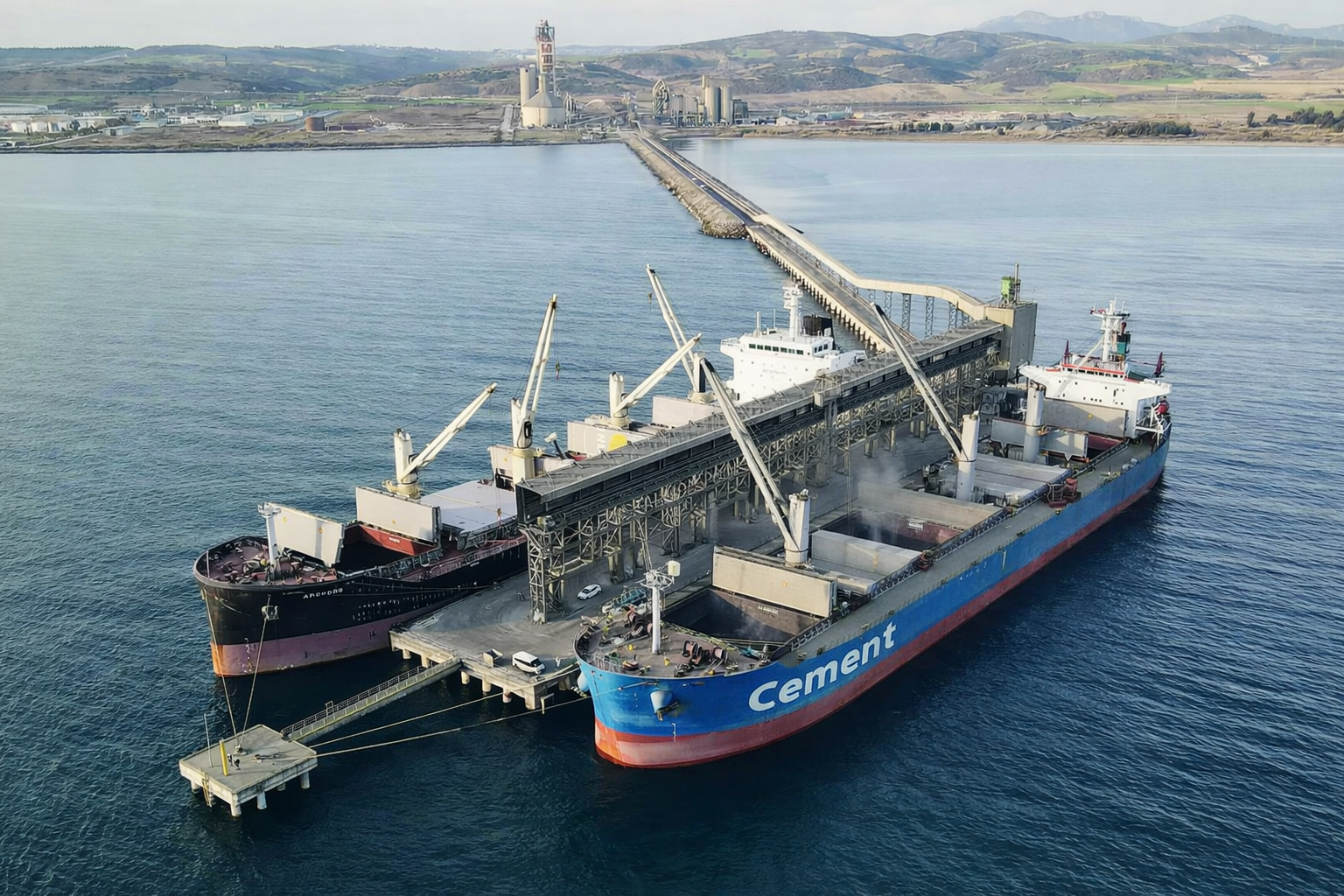
Cement is heavy. It’s low value per ton compared to the cost of moving it. That turns “cement pricing” into a local problem fast. A plant can only reach so far economically. Imports can only compete if terminals, ships, rail, and trucking line up. If they don’t, you’re not in a global market. You’re in a regional market with a few suppliers and limited alternatives.
That’s why cement does not drop cleanly when demand cools.
It’s not a stock ticker. It’s contracts, lists, and producers protecting margin in markets where the customer does not have many real options. Down moves are slow. Up moves are fast. Everyone in concrete has lived that.
The next driver is energy, and this is the one the concrete side feels in their ribs.
Cement manufacturing is a heat business. Fuel and power set the cost floor. Different regions have different fuel mixes, different energy volatility, and different exposure to shocks. Then you layer in logistics constraints and freight, and you get “shortages” that are not really shortages of cement. They’re shortages of the ability to move cement at the right time and cost.
And if you’re buying ready mix, energy hits you twice. First in the cement. Then in the delivery.
Now add policy.
Europe is the cleanest case study because the rules are turning into real cost. As of January 1, 2026, the European Union moved into the definitive period of the Carbon Border Adjustment Mechanism. Spell it out because it’s going to keep coming up. The Carbon Border Adjustment Mechanism is basically a way to attach a carbon cost to imports of certain carbon intensive goods, including cement, based on the emissions embedded in production.
The part that matters in April 2026 is this: it has started, but the money side ramps in through the certificate system later. The reporting and structure is live now, and the cost pressure is not theoretical anymore. It changes import economics and it changes who has pricing power.
This is one reason you can have a place like Germany sitting at numbers that make North American buyers choke.
And here’s where the conversation usually goes sideways.
People see China’s lower price and assume it should pull everyone down.
That only works if cement can actually move into your market in meaningful volumes, at competitive delivered cost, consistently. Cement doesn’t teleport. Low prices in one country do not automatically flow into another region the way they do for things that are easier to ship.
So global spreads can persist. Not because markets are broken. Because physics is real.
Now, what surprised us when we pulled on this is that U.S. cement manufacturing has been quietly working the cost side, even while prices still feel like they only go up.
Two moves stand out.
The first is reducing clinker content. More cement in the U.S. is being produced with a lower clinker factor, including Portland limestone cement. Less clinker generally means less heat per ton of finished cement. That changes the production economics, even if it doesn’t feel like it on bid day.
The second is fuel strategy. We talked about this back on Concrete Logic Podcast episode 045 a couple years ago. Cement plants have been shifting away from coal and petroleum coke toward natural gas and other fuel approaches as emissions requirements tighten and operators chase more stable operating costs.
So on paper, you would expect at least some pricing relief over time from those kinds of structural moves.
In reality, cement pricing still feels like a ratchet. It climbs, it pauses, it climbs again. Even when costs get managed, other drivers fill the gap. Energy volatility. logistics premiums. policy costs. capital costs. local market power.
That’s the real point.
If you’re in construction, you don’t need to be a cement expert. But you do need a better mental model than “cement just goes up.”
Cement goes up for reasons. Most of them are predictable if you look in the right places.
Local supply and demand first.
Then energy.
Then logistics.
Then policy.
And then the part nobody likes to say out loud, local market structure decides how much of any cost reduction ever shows up in your price.

Counting Ships: Australia’s Energy Tradeoffs Get Real