

EP #157: Low-Carbon Concrete - Does the Math Actually Work?


THIS EPISODE IS BROUGHT TO YOU BY: GPRS
Before you cut, core, drill, or excavate, make sure you know what is inside the concrete.
GPRS helps contractors locate rebar, conduit, post-tension cables, utilities, and other hidden hazards before they become expensive problems. Their scans help reduce hits, downtime, expenses, and keep your people safe.
Learn more here:
https://www.concretelogicpodcast.com/gprs
ON THIS EPISODE OF THE CONCRETE LOGIC PODCAST
Low-carbon cement sounds good on paper.
But can it actually compete in the real concrete market without subsidies, mandates, or customers paying a “green premium”?
That is the question Seth gets into with Ryan Gilliam, CEO of Fortera. Ryan explains how Fortera’s approach differs from many other low-carbon cement companies by bolting onto existing cement plants, using limestone as the feedstock, and turning CO₂ back into a reactive cementitious product.
This conversation gets into the hard part of low-carbon cement: economics, field performance, scaling, ready-mix adoption, policy risk, and whether these products can survive when the market stops caring about the carbon story.
Ryan makes the case that the future of low-carbon cement will not be built on guilt, regulation, or good intentions.
It has to perform.
It has to be cost competitive.
And it has to work in the field.
WHAT YOU’LL LEARN
• Why “green cement” usually makes contractors and producers assume there is a compromise
• How Fortera’s technology bolts onto existing cement plants instead of replacing them
• Why limestone loses roughly 44% of its weight as CO₂ during traditional cement production
• How Fortera claims to turn that CO₂ back into cementitious material
• Whether Fortera’s product should be thought of as an SCM, a cement replacement, or a new cement
• Why ready-mix producers are skeptical of alternative cements
• What field feedback Fortera has received on finishing, flow, pumping, set time, and cracking
• Why Ryan does not believe customers will pay large green premiums
• How policy changes could impact demand for low-carbon cement
• Why carbon capture usually struggles economically
• How Fortera’s approach differs from traditional carbon capture and storage
• What has to be true for low-carbon cement companies to scale
• Why first commercial plants are such a hard step for new cement technologies
• Why Ryan believes performance, not carbon marketing, will decide which technologies survive
CHAPTERS
00:00 Introduction to Ryan Gilliam and Fortera
03:25 Ryan’s background in materials engineering and cement research
05:20 Fortera’s approach to low-carbon cement
08:28 Is Fortera’s product an SCM or a new cement?
09:23 Blended cement use versus 100% product use
10:33 What is driving demand for low-carbon cement?
13:39 Scaling challenges for new cement technologies
15:43 Field feedback on alternative cement performance
18:58 Type IL rollout, skepticism, and contractor pushback
20:07 Policy risk and whether low-carbon demand depends on regulation
22:18 How Fortera captures CO₂ from limestone
23:07 Why the economics may work
24:41 How this differs from traditional carbon capture
25:45 What cement plants need to adopt the technology
28:07 Fortera’s history and lessons from earlier attempts
29:00 How Fortera may go to market
30:20 Ryan’s main takeaway for the concrete industry
32:09 How to contact Ryan Gilliam
GUEST INFO
Ryan Gilliam
CEO, Fortera
Profile: https://www.concretelogicpodcast.com/guests/ryan-gilliam/
CONCRETE LOGIC ACADEMY
If you work in concrete and want practical education that actually connects to the jobsite, check out Concrete Logic Academy.
This is not theory for the sake of theory.
It is concrete education built around the stuff producers, contractors, engineers, and field leaders deal with every day.
Specs. Mixes. Placement. Finishing. Troubleshooting. Materials. Durability. Bad assumptions. Costly mistakes.
Get access here:
https://www.concretelogicpodcast.com/concreteschool
SUPPORT THE PODCAST
Concrete Logic runs on a value-for-value model.
If this episode helped you think through low-carbon cement, alternative cement technology, or what might actually work in the real market, send some value back.
Donate here:
https://www.concretelogicpodcast.com/support/
You can also support the show through KUIU:
https://www.concretelogicpodcast.com/kuiu
For sponsorship or media opportunities, contact:
seth@concretelogicpodcast.com
CREDITS
Producers: Jodi Tandett & Concrete Logic Media
Music: Mike Dunton
https://www.mdunton.com/
WHERE TO FIND SETH
Concrete Logic Podcast:
https://www.concretelogicpodcast.com
YouTube:
https://www.youtube.com/@concretelogicpodcast
LinkedIn:
https://www.linkedin.com/in/seth-tandett/
Like, subscribe, comment, and share the episode with someone in the concrete industry who needs to hear it.
Seth Tandett (00:00)
And welcome to another episode of the Concrete Logic Podcast. And today, have Ryan Gilliam with me with Fortera. We're going to talk about low carbon cement today. That's what Ryan and his company do. They're in that market. So the goal here, today's episode, is to understand where low carbon cement market really stands, where it stands, what approaches are gaining traction.
Why some companies scale, why others stall, and what has to be true for these technologies to last in the real market. Ryan's going to help with that and much, much more. I'm excited to have this conversation. But before we get started, I just want to remind everyone how you can support the show.
been doing a bad job. I said it on the last episode, I've been doing a bad job of asking you do one thing. then one thing is, is if you enjoy the podcast, or you're learning something from the podcast, please share it with a colleague or a coworker out there. Spread the word, let folks know that this is out there. We're trying to get some concrete education to folks. And then the next wave, you go to www.concretelogicpodcast.com.
There's a couple ways that you can get a hold of me. One of them is at the top menu there's an Ask Seth button. If you click on that, it'll pop up an email form and you can fill that out. And what I'm looking for is guest or topic suggestions. So tell me what you want to learn or who you want to hear from on the show. That's always helpful.
And if you don't want to do the email form and you just want to leave me a voicemail, there's a little microphone icon in the bottom right hand corner of that same homepage. You click on that and it'll record your voice right off your computer or your phone, whatever you're using. Again, just looking for topic and guest suggestions. The next way is on the same homepage. There's a donation button and the, I guess the way we're presenting the podcast is
a value for value system. So if you get some value out of the podcast, what we're asking is send some value back. the way you can do that is by clicking on the donation button and send a donation our way. I'm not going to tell you how much to put in there. It starts off with zero and you can go in there and plug in whatever number it is, a dollar, $5, $500, whatever it is that you feel the show gave you.
And then the next way you can support the show is check out ConcreteLogicAcademy.com where we have like it's a kind of you know same same material, but it's in a more of a professional development hour format. So if you need professional development hours, we have the same kind of content, but then we give you a syllabus and quizzes and other resources for you. So you can get your professional development hours if you need it or if you just want to
you know, have some continuing education in the concrete industry. All right, with that, Ryan, let's get started with this. again, I always tell folks, I always had the best conversations before we hit record when I get to know the guest. And Ryan and I had the exact same thing. So one of these times I'll have to do like a after dark kind of podcast or something where I share, if guests want to share what we talked about before.
before we start. Anyways, Ryan, can you give us a little bit of background on yourself and your company? I think that's important for today's podcast and then we'll take off from there.
Ryan Gilliam (03:25)
Yes, that sounds good. And one, thanks for having me. And you're right, I wish we were recording some of that. feel like we've already had such a good conversation. Yeah, so maybe just on my background. So I came into the cement concrete world a little bit differently than I'd say a lot do. I come at it from a researcher side. So background did my PhD in materials engineering. And when I was leaving school, I was fully planning to go the academic route. And yet then I got
called by a startup company, venture-funded startup company in the cement space almost 20 years ago to come join the company to do research and really try to solve for a new type of cement that was actually capturing CO2. So long story short, that's how I got started into the space. And what's happened over time is really started realizing that there are things that you can do in the space to help solve for some of the CO2.
but do it in a way that's actually beneficial to the space and provides a product that actually has, can have some performance advantages. And so I think, you know, I kind of fell into this space, but now almost a couple of decades later, you know, very much focused on trying to bring a product to the market that the cement concrete industry wants to use has performance advantages, but also in a way that's actually economic and helps with increasing capacity in the U.S. and building out supply chains and...
making sure we can solve for critical infrastructure, all those other fun things that kind of go along with it. But it's been an interesting journey for the last 20 years and learning from the space on what's actually needed to make a good product.
Seth Tandett (04:50)
Yeah. Well, you've been in it for a while. didn't. So you definitely know what's going on. Can you talk about y'all's approach? Because I think it's different than I would say a majority of the ones out there. From what I could tell from your website is like you're bolting on to existing facilities versus being as whole separate facility and creating your own, I guess, ecosystem.
as far as producing a product. Can you talk about a little bit about that? Why y'all are different than those other ones?
Ryan Gilliam (05:20)
Yeah, for sure. so we're really focused on making cement.
you know, we're at the cement plant site and, you know, as is obvious to your listeners, but cement's the glue and concrete. I think the fundamental challenge with cement and concrete is just how large the industry is and how large these plants are. And so we've approached it from the perspective that if you're gonna make it work, you gotta be competitive on economics. in a part of the, even in your intro, when you talk about, you know, green or sustainable cement, I think the unfortunate part of that is it almost comes,
with those words sounding like you have to make a compromise, right? Whether it's on cost or performance, you're making some type of compromise to use this new product. And I just think fundamentally in this space, people aren't gonna make a compromise and people aren't paying green premiums. And so to solve for that, we came at it from the perspective of how do you actually scale up a technology to large scale, make the economics work in a market where cement's fairly low cost product when you're looking on a ton per ton basis. So how do you make economics actually be competitive?
competitive in this space. And to solve for all that, we took the approach of really leverage what the incumbents or the big cement players do well. They understand scale, they understand logistics, they understand operations. And so we bolt on our technology directly at a cement plant. And our only feedstock is limestone, which cement plants, that's 80 % of the feedstock into production of cement. that's our feedstock. But what we do is when that limestone goes into kiln and making cement,
lose
44 % of that weight of that limestone to CO2 emissions because there's 44 % of the weight of that solid is CO2. That's why it's so CO2 intensive. So what we figured out was instead of just losing those emissions, we capture that CO2 back again with the lime that came out of the kiln to make a reactive form of limestone. And this is the same way coral reefs and shells form in nature. So we kind of took our cues from nature and how nature forms its building blocks. The benefit of that is means we park ourselves
cement plant, we capture the CO2 emissions that would have gone to the atmosphere back into product. And what that does for you, it allows you to make 1.8 times the amount of product coming out of the plant. for now, for every ton of limestone feedstock, you make one ton of product, you're basically turning CO2 actually into cement, into stuff that can go into infrastructure. And that's really what makes the economics work. And so by bolting our plants, the chemical process we put beside the plant, capturing the CO2, but by bolting our process,
What we make out of it is, you know, this white powder. This is how comes directly out of our reactor. It's not milled after the fact like you would with your clinker. And the benefit of that powder, is calcium carbonate. It's 44 % by weight, captured CO2, but it can be used both as a partial cement replacement, so under ASTM 595 with traditional Portland cement. Or it can go all the way to 100 % our product as the cement as well under 1157, so under performance-based.
regulations. And you know I think the approach we've taken really is to be beside the cement plant, leverage their feedstocks, leverage their infrastructure, leverage the back end logistics and sales so that we can put our product out there cost-effectively or at the same price as traditional cement.
Seth Tandett (08:28)
So are you an SCM? Are you
competing against like, Slag and Flyash? Is that a good way to look at your product or should we be looking at it differently?
Ryan Gilliam (08:40)
Yeah, I so when we're putting it with Portland cement, I would say it's really more synergistic with slag and fly So we do a lot of mix designs where, know, ternary mix designs alongside slag and fly ash. So the benefit of our material is it's better for early strength and helps on flow. So when you're mixing with fly ash or slag, you can solve for some of those other things that come with using those SEMs. But effectively, when we're using it in a blend, you could look at it as being an SEM, but we're really replacing some of the Portland cement side piece of it.
all the way to 100 % product, you know, for, and this was a whole 100 % OPC replacement, then it's really a new type of cement.
Seth Tandett (09:15)
Yeah, I get
that. But for most of what you all doing right now, are you doing blends or are you just your product?
Ryan Gilliam (09:23)
It's been an interesting learning curve, I think, when we've been working with ready-mixing customers. It all started from the world of blends. And the viewpoint was fall under ASTM 595. There's less risk for adoption. People get comfortable with the material. And so most of the projects we've done are the larger pours where we've done lots of concrete trucks of our material into job sites. Those have mostly been, all under, with blends. And a lot of those are blends with either with flash or swag or other things that
are kind of being used in the space. What's been interesting over the last year, two years is there are performance advantages with our 100 % product. It's one 20th the heat generation of traditional Portland cement. It's about one 10th the shrinkage. So there's thing, and you get to full strength. So we will get to full strength on our concrete in two days as opposed to kind of 28 days in traditional Portland cement. So based on some of the performance advantages in our 100 % product,
we're starting to find a pull from end customers of wanting to demo and use the pure product more. And so that's been a shift that we've seen more from a customer poll over the last year.
Seth Tandett (10:33)
Gotcha.
Let's talk about the market demand for your product and products like it. I haven't had a lot of folks that are doing what you're doing on the podcast, but it seems like a lot of them are in California. Are there some kind of not a carbon tax, but something along that lines that makes it advantageous for folks like yourself to
work in California? Is that the draw there? I know there's a lot of smart people in California too. I don't want to take that away. The schools and everything that are there. think that, you know, I'm thinking the concrete AI folks and folks like that are over there in California. But just, I was reading something earlier last night when I was preparing for this episode comparing the different carbon regulations within the states themselves.
Ryan Gilliam (11:04)
Yeah.
Seth Tandett (11:23)
And of course, California is always pushing the envelope on what they want to do. Is that the market draw there, or is there other demands that I know like hyperscaler data center guys are asking for it, the Googles of the world, the Microsofts of the world, they're all asking for it. But is there another demand maybe I'm not aware of that you all are seeing out there as well?
Ryan Gilliam (11:48)
Yeah, I mean, would say, and this is just one person's view. mean, it'd be interesting to actually ask that across a bunch of these companies. The reality is lot of the venture capital space is in California. So you see a lot of these startups, new techs found in California. There are specific CO2 kind of mandates and things in the cement world as SB 596 to get to CO2 reduction with cement concrete in California specifically. But I will say like we built our first plant in California. We built out our R &D facilities in California.
think again tied to some of the venture capital investment and what we were doing. All of our commercial projects that we're currently working on are not in California to be clear. And it's really, we've gone from, yes, the company started here, but we're not looking to green regulations and other things like that for adoption of our technology. At the end of the day, and I always kind of call it like the airplane analogy, you always have people that are willing to pay for business class seats or some people are willing to pay for green premiums.
But planes not gonna fly unless you fill all those economy seats and once you go after the economies of scale You need to get to some end production make economics work. You're well beyond anything to do with green premiums So for us we're looking to markets where there's there's customers that want to use the product and you've already picked up a hyperscalers are great pull right now in this space that are looking for things that do have They need to perform, but they also have some some green bandages but really
we're looking for is where is there a need to expand capacity. We're a lower cost capital way to expand capacity in cement production. US has 25-30 % imports right now. So we're looking for those markets where there's a need for more capacity. We're a lower cost way to expand that capacity. We have a product that has interesting, can be used both as blend or has interesting advantages when you go to 100 % product. So that's really more the driver that's picking it up as opposed to the founding story where
to have a lot of early stage companies in California.
Seth Tandett (13:39)
So, OK. Yeah, let me think about that more. Maybe we'll circle back to that. As far as scaling, what are the bottlenecks that you're seeing right now for someone like you guys to scale?
Ryan Gilliam (13:53)
Yeah, it's a tough journey for scaling. mean, people for first plants are risk averse for good reason. It's not even on the product side. I think that we've done a lot to get our product into people's hands, get people comfortable with the product, get comfortable with how the plants run.
But one of the realities in the cement and concrete space is it doesn't typically work off of offtake agreements or take or pay offtake agreements. works off of, it's really a merchant market. And so the hard part of scaling a technology up is you have to bring in that project finance and debt to be able to scale to large commercial plans. Generally those happen based off of confirmed offtake agreements to get the financial groups interested in doing it. And that's really just not how the cement
Space works and so a lot of the the journey for us has been one getting enough of our material into people's hands so that they can get comfortable with it and actually create a draw for it and two it's really been educating on the financial side and getting people comfortable with the approach to finance these these plants and so that's that's the journey we've been on for the last few years where our plant up in Redding, California's got a 15,000 ton per year cement plant that's been running the last two years that's given us enough volume to get get get the tech side
part of it comfortable. Now it's the journey on getting people on the financial side comfortable with making that next step.
Seth Tandett (15:08)
All right. So where else in the country are you guys working right now?
Ryan Gilliam (15:15)
Yeah, we haven't announced any of the specific spots, but we have cited where we're doing our first larger commercial plant. It's going to be 200,000, 300,000 tons per year of cement. But really where we've gone to is the markets where there is customer need and desire for using the material. again, I know you picked up on other episodes of yours as well, but there's a demand from the hyperscalers that are really helping drive some of this early adoption.
Seth Tandett (15:43)
Yeah. What's the feedback you're getting from the field as far as the other alternative cements out there? The feedback that I've heard, I'm not finishing concrete. I'm just hearing from folks out in the field is it could be sticky. It takes longer for it to set up.
There's shrinkage cracking that shows up pretty quick after curing and things like that. What's your initial feedback from the pores that you all have done so far?
Ryan Gilliam (16:23)
Yeah, so all of that is right. mean, and again, I think when people hear alternative cements and that is it, there's a view that it comes with compromise. So you're going to get performance disadvantages or cost disadvantages. The reason why we've been putting a lot of product into people's hands is frankly to go through that learning curve. And in saying that, that means yes, we have not every pore has worked out perfectly. It is part of learning. know, as you, as you know, like every mix design is a little bit different. Cements are all a little bit different across the country.
So you need to go through some of those trials to really figure out what's going to work well, especially when we're talking about doing our blends. But in terms of actually working with the ReadyMix companies, I think we have seen now that in people actually working with our material, there are advantages that they've seen. They like the finishing quality of it. And so what started with us doing demos with some of these big ReadyMix players has turned into actually a poll where they're now specifying us in jobs. So we're regularly doing
large pores out there with ReadyMix right now and those are all driven by them having tested and got comfortable with it and actually then actively specified our material in jobs with the end users. And I think that's been a big switch for us is to actually see the ReadyMix come into us and specifying us as opposed to us trying to push for these demonstration type projects. And we have one coming up, nothing publicly I don't know, but it's gonna be a 5,000 cubic yard of our material in a blend. So these are gonna be some
bigger
jobs that we're doing with our product. And again, that comes from people just getting comfortable with it, working with it, seeing how it finishes, the trade-offs as a blend. And you picked up on a bit of it, like this whole cracking thing or set times and everything else. We initially, when we were first developing our product and looking at mix designs, a lot of it was from the viewpoint of how do we make something better or give performance advantages? And I think what we figured out really in working
with the concrete space was actually we want people so that when they're using it and they're pumping it or when they're finishing it they don't know they're actually working with something different. So for us it's been about tailoring our product to get to comparable set times and generally speaking we do have better flow options and we've heard from people that are pumping our material that it that it you don't have the same issues with clogging up their pumps. So we've heard advantages on it but by and large what we're really trying to do is make sure that is plug-and-play with what people are used to used to working with.
I think there's a healthy bit of skepticism out there because there's a lot of things that have been proposed in the market that obviously don't have that or don't do that. Whether it's water demand issues or early strength issues and everything else, people have seen a lot of things not work out well.
Seth Tandett (18:58)
Yeah.
Well, cement industry didn't do anybody any good how they rolled out type one else. You know, put you all in a bad spot because now everyone's anytime there's something new or it's going to get a, you know, get some, a lot of eyes on it and a lot of pushback, I'm sure as you're probably witnessing. The, is there any concern of
On your side of things, I think you mentioned this earlier when we're talking about market demand. Is there any concern from your side of things, you know, if the policy changes with the government, the government, you know, seems like the policies within the United States changes with each new administration. So it'll go from one extreme to the other. And recently, the EPA rescinded their view on CO2.
If the CO2 for some reason, someone waves a wand and says, CO2 is no longer a problem, is there any concern from y'all's side on how that, or are you guys trying to solve other problems?
Ryan Gilliam (20:07)
So.
I think on the space as a whole, yes, that will change things, but for us, no. Look, I've been in the sustainability climate world for a long time and right or wrong got into pretty hardened thesis. I personally don't believe people will pay green premiums. I don't believe on betting on regulatory things because political winds will change and so if you're banking on that, it makes it very difficult. I think it's very hard if you're reliant on green energy to make the green story work just because of 24-7 cost-effective green energies.
not totally there yet. So when we've approached this from the company perspective, yes, we have the benefit of we are much lower, 70 to 80 % lower CO2 per ton of our product versus traditional Portland cement. That may help us get in the door to have a conversation because there's interest in trying to solve for this. And that's why Hyperscalers looking at everything else. But at the end of the day, we've approached this from the perspective of we need to be cost competitive without any price on green. And we need to have advantages relative to what's out there. Otherwise, why adopt it? Why take any risk?
with it. And so I think that with when it comes to the product itself we know that on an OPEX comparison we can be competitive with Portland cement when we go to our scale plants and from a CAPEX perspective because we're bolting on to existing cement plants and leveraging what they use we're able to reduce that cost of CAPEX to expand capacity to be to be competitive in the market. So I think from a a pure business case perspective we've approached this independent of anything to do with green we've approached this from the perspective of can we solve operating costs and capital costs to be
to
be effective. And I think when you look in the US, the fact that 30 % imports, I think there's a desire to expand production in the US. I mean, this is critical to our infrastructure, the cement and concrete industry. And what we do is we give people a more cost effective way to expand capacity. And it's also hedged against CO2 because it's lower CO2, there's not as big of a risk, know, in case political winds, winds do change. And so, yes, I think as that stuff changes and as
CO2 regular changes it makes it maybe harder to get interest from people to adopt. But if you approach it from the perspective of providing a product that does have certain performance advantages that people can really use and is cost effective, you're not looking at it the same way.
Seth Tandett (22:18)
Yeah. you guys are capturing the CO2 that's coming off the clinker. Is that what you're capturing?
Ryan Gilliam (22:27)
I
I mean, it's a little bit comical, but I mean, basically we're taking limestone and we're turning it back into limestone. But we're going from a form of limestone that's an inert rock to another form of limestone. what this is. I mean, this is just limestone. This is 44 % by weight capture CO2. But it's a form of limestone that's actually reactive. You add water to this, it's going to cement out. again, that's the same way that coral reefs form and shells form in nature. So because we're taking limestone and turning it back into limestone, we're taking those CO2
Seth Tandett (22:31)
huh. Right.
Ryan Gilliam (22:55)
emissions that normally happen with when you go through the cement kiln making your clinker and we're putting it back into the product and that's really what drives the economics to work is we're making a lot more product by having the CO2 actually in the product to sell.
Seth Tandett (23:07)
what I'm hearing from you is you're cost competitive with the cement that's out there right now, but you're bolting on and you have more additional step onto what's going on at the site. I guess logically that doesn't math out for me, so that's why I'm struggling to understand that.
Ryan Gilliam (23:28)
So it's funny, it didn't math out for me until, think the reason why we started the company was because we missed on the math. And the math is fairly simple. It's traditional limestone for every ton of it that you quarry, grind, crush, put into the kiln, put mud into, you lose 44, almost half its weight to CO2 emissions.
So that means for every ton that you're putting in, you're only really getting a half a ton of that limestone, a little more than half a ton of that limestone out of it. Because we put that CO2 back in, that means out of that same amount of limestone for every one ton that you're putting into the kiln, we now make more product because all that CO2 is coming back in. We make 1.8 times the product on the back end. So really what we're comparing is the capital costs of our process and the operating costs of our process versus the fact that you've got 80 % more product. And that's why it's cost effective is weak.
Seth Tandett (24:14)
⁓
Ryan Gilliam (24:15)
is the more product that really makes it work.
Seth Tandett (24:17)
gotcha.
Same input, you just get double the output.
Ryan Gilliam (24:21)
Exactly, that was frankly, you're the logic piece there. That was actually when we were looking at, we're like, how could you ever add complexity, add more process units to a plant and make the economics work and be competitive? And it's that miss on the fact that you're making that much more product that makes it all work.
Seth Tandett (24:41)
And that's a different approach to, I've had John Klein on the show a couple of times and he's like my go-to for carbon capture. And even he says it's, you the economics of carbon capture is, it doesn't make sense right now. But this approach is different. How, how is that different?
Ryan Gilliam (24:46)
it.
Yes, John super knowledgeable on the space. Next time you talk to Matt, ask him what he what he thinks of us. I love to know, but I think.
Seth Tandett (25:07)
Right.
Ryan Gilliam (25:09)
So in traditional carbon capture, it's just a cost center. So someone is paying to capture, separate, purify, compress, put that CO2 underground. And so that's just an added cost. I think it's going to be very hard. know Heidelberg and some of the big players have implemented that, but that's also coming with government subsidies and support and everything else. But that's a pure cost center. You're paying money to capture that CO2. Because we take that CO2 and turn it actually into product, what we're really doing is we're taking it from an emission and an issue.
and putting it back into the product and turning it into value. And that's really, I think, what differentiates what we're doing and why you can make the economics work.
Seth Tandett (25:45)
For cement manufacturer to consider bolting you guys on, what do they need to have enabled? Is it space, additional power? What kind of things do they need to have in place for them to be a good spot for you guys?
Ryan Gilliam (26:00)
Yeah, I mean, so when we make our product, mean, it is in a wet chemistry and then we have to dry it. So it's having availability of natural gas or something for drying the product. It is a bunch of stirred tank reactors, so it's having power availability. It's an aqueous process, so we do use water in all our tanks, so it's having water available, which I think you're getting to the right question here. I mean, does not necessarily fit for every site because cement's dry process for the most part. it's finding sites that have the right fit, but generally,
speaking most of sites we look at there's ways to get all that utilities and all that onto site and we've been able to navigate that piece of it. There is space obviously available as well so we need five plus acres to bolt our process on. Again generally like these are typically very large sites so for most places that works but for kind of more ones that are in the city or where towns have grown around them maybe those aren't completely a clear fit. I honestly think the bigger challenge though and this is what the journey we've been on is
Look, when you build large scale commercial plants, your first plants are going to be less efficient. You're going to have issues with them. You're going to have to go through some of that learning curve. And so I always say with these big cement companies, it's everyone wants to be first to be second. You know, why be the first in line to build out, you know, a new technology, put a new, that new product to market. Even if you do see advantage and you've tested it, it's let somebody else do these first plants and get through that learning curve on how to reduce costs, how to improve operations and everything.
else. And so that to me is the fundamental challenge of the space is you have to get to such large volumes and economies of scale to make economics work. mean cement plants in the US are million plus tons a year type plants. When you're talking about moving 3,000 tons a day of material off a site, are large, large plants. I suspect for lot of listeners, unless you've been to cement plants, it's hard to get how large these things actually are.
Seth Tandett (27:43)
Yeah.
Ryan Gilliam (27:45)
So, but same as things needed for us, you need to get to large plants to make all these economics work. You know, you need the same number of people to operate a small plant as you do a large plant. And so, I think that is the fundamental challenge is getting, you know, why be the first adopter? So we've had to be creative on business models and really incentivize people in the right way to get to these first plants, but that's really the challenge of trying to bring something new to the industry.
Seth Tandett (28:07)
Yeah. And
how long have you guys been doing it?
Ryan Gilliam (28:10)
So we're kind an interesting story. we're, a company, we're seven years old, six, seven years old. But, you know, I think when my, intro, mentioned 20 years ago, I started into the cement concrete world. The actual product and process started almost 20 years ago. And at that time we had created this new cement, the same type of cement we're using now and scaled up, piloted it, you know, went through all that development work. But unfortunately it wasn't grounded in economics. It wasn't partnering with cement plants. It wasn't figuring out how to leverage what they do well to drive down costs.
And so we shut that company down long ago. And so with Fortera, the benefit of Fortera is we have a history of actually working with this material, putting it into real world applications, seeing that it holds up over time and some of that risk benefit of it. But we're in a newer, younger company by really only being six, seven years old.
Seth Tandett (29:00)
So what's the goal? Is this going to be a, like the cement guys are going to offer this as a separate product or is it going to be like an offering that they're going to have, that they're going to offer to the ReadyMix guys or I guess what's your vision of this, how this all unfolds?
Ryan Gilliam (29:22)
Yeah, I mean, think a lot of the different companies we're dealing with look at it differently. A few years back, what I would have said is it would have been offered almost like a 1L, but I would like to believe without some of the issues that 1L's had. Because when you mix us in under ASTM 595, we don't have some of those flow issues and some of the other issues that people have seen. So the thought process really initially would have been we would have gone to market kind of similarly as a blended cement at the ready.
mix. You know, as you know, at the ready mix side, lot of them don't have extra silos to carry a second line of cement or product. And so that was always the intent was that's how we would go to market. But as we've gotten success on the 100 % product, and you can see, I mean, it's a really nice white product. there's this other kind of just performance attributes that people like. There is a pull for getting that 100 % product. And so I think what it really will be offered up as a as another line of cement effectively that people can can buy.
Seth Tandett (30:20)
It's definitely a different approach than what I've heard so far. It's interesting. I'm sure there's a million other questions I'm not thinking of right now that I know some of the listeners are like, you should be asking Ryan this. And I am not thinking of them right now. If you want someone to take one thing out of our discussion today, what would that be?
Ryan Gilliam (30:23)
Thank
I think like generally what we've seen in the space is once somebody here is sustainable cement or green cement the Automatic assumption is that means there's a compromise you're either given up on cost you have to pay a big premium or you're given up on performance And I think there are ways to bring Technologies and product to market that actually understand what is needed in that in the concrete space What is needed on a performance that it doesn't actually require you to compromise and so if there's anything for me, it's like
You know, we every time somebody tests our material like we even have and it's all fair healthy skepticism But a lot of people when they test our material I think you know, they they immediately think it's not going to perform well and one of the biggest ready-mixed companies in the US just did a pure test with us last week and The concrete after four days with our material got to almost 10,000 psi So really high performing for a company and I think even they were surprised didn't go into it thinking that it could perform
the way it did. you know, again, I think it's really being open to that there are ways to do this that are going to be economic that don't require you to compromise and really to give us and give these other products that are out there a shot to just see how well they perform. And I think the fair thing I'm going say is I wouldn't listen to people tell you how good their product is. For us, it's the same way. Like if you want to test it, we will send you material. You can test it. You can get comfortable with it yourselves to use it.
So, kind of similar for your side. I'd love for Baker and for you guys to test it and do a pour with us.
Seth Tandett (32:09)
Yeah.
All right. We'll see what I can do for you, Ryan. ⁓ If folks want to reach out to you and learn more about you and your company, what's the best way?
Ryan Gilliam (32:13)
Yeah.
Yeah, probably easiest way just to reach out, because it's probably easier than trying to learn how to spell my name, is just info at FortaraUSA.com. And if you reach out to that, we're always happy to connect and share what we're doing.
Seth Tandett (32:33)
Okay. And I'll have Ryan, everybody gets their own page on the website when you're a guest. So I'll make sure I have a link for Ryan on the show notes for everybody. Ryan, thank you for coming on the show today. I enjoyed our conversation. I'm still open. I'm not closing the door. still, I want to, I'm going to be following along with you guys. I appreciate you coming back on. Yep.
Ryan Gilliam (32:53)
Hahaha.
Awesome, thanks so much.
Seth Tandett (33:01)
And until next time, folks, let's keep it concrete.
CEO and co-founder of Fortera
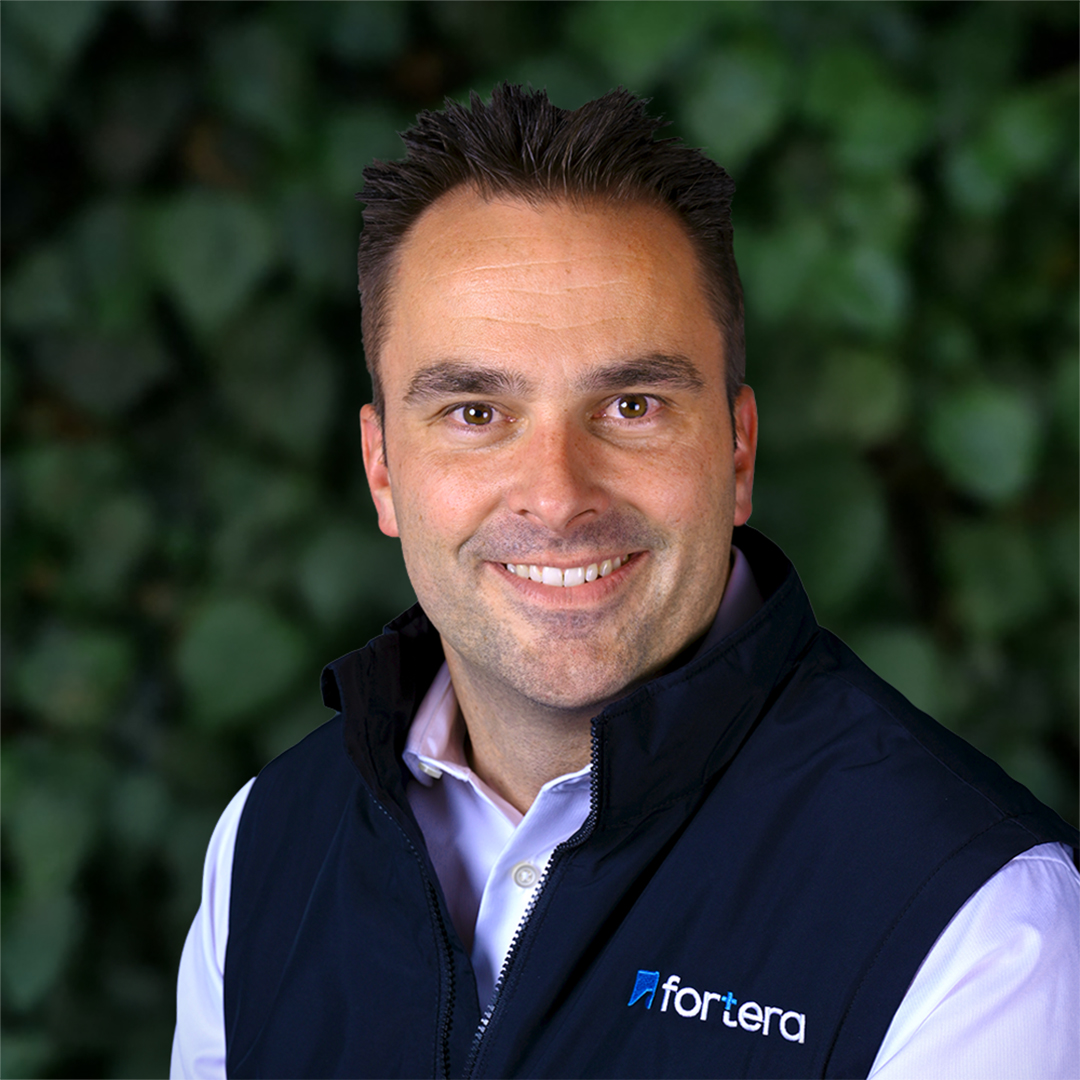
Ryan Gilliam is co-founder and CEO of Fortera, a low-carbon cement manufacturer making a cleaner, better cement. Gilliam is a serial entrepreneur who has dedicated his career to solving climate issues. Specifically, Gilliam has focused on decarbonizing hard-to-abate sectors like cement, energy, and petrochemicals. He has over 100 granted patents focused on electrochemical, chemical, and materials technologies for the beneficial reuse of carbon emissions, green hydrogen production, and more environmentally friendly chemical manufacturing. In addition to his role at Fortera, Gilliam also serves on the Board of Directors of Verdagy, a company he founded that is innovating advanced electrolysis technology for the large-scale production of green hydrogen.