Before You Build on an Old Coal Site, You Better Know What GOB Is
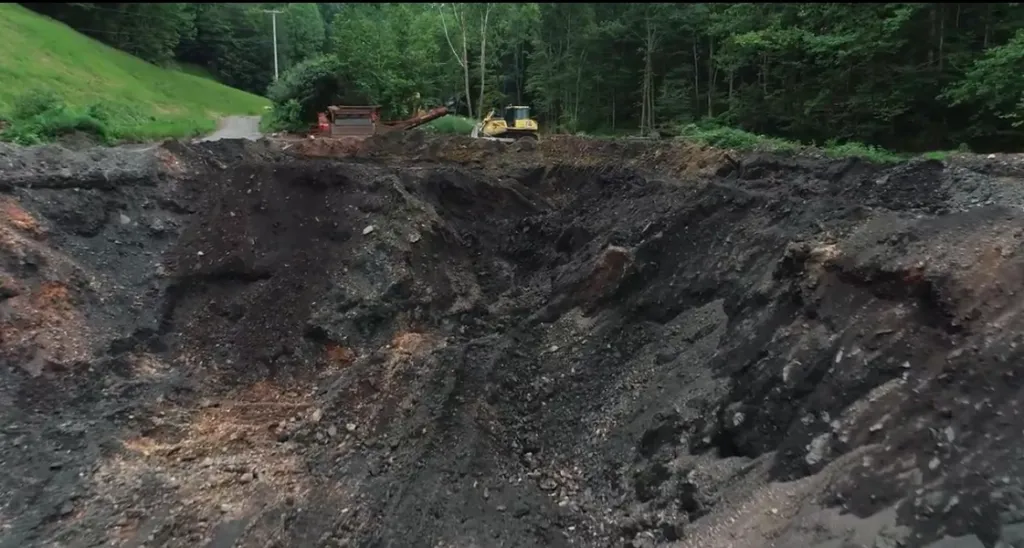
What a load of GOB | Credit Cardinal News
"The economy is a derivative of energy."
- Doomberg
I am part of the 7x24 Central Virginia Exchange Education Committee. It's a committee that is part of 7x24, a networking group for the data center industry. We recently met and a colleague casually mentioned "GOB removal" when during our committee discussion someone brought up the feasibility of constructing data centers at old coal mining facilities since power and water is available at these abandoned facilities since many have been shut down because of our country's distaste for burning coal. Anyhow, I have never heard of GOB.
That got my attention.
Because when someone casually throws out a term like that, and everyone else seems to keep moving like it is normal, I start wondering if I am the only one in the room who has no clue what they are talking about.
So I went and looked it up.
GOB stands for "Garbage of Bituminous."
That name tells you a lot right away.
It is basically old coal mining trash.
Back when miners pulled coal out of the ground, they did not get a nice clean product. They got coal mixed with rock, shale, slate, pyrite, fines, and other junk. The valuable coal got separated out. The leftover material got dumped in piles near the mine or prep plant. Those piles became GOB piles.
So when someone says "GOB removal," they are talking about cleaning up those old waste piles that have been sitting there for years.
Sometimes for a very long time.
That leads to the next obvious question.
Why is this stuff still there?
Because for a long time nobody had much use for it.
It was low value material. Wet. Dirty. Inconsistent. Lower energy. More ash. More junk. It was easier to dump it than figure out what to do with it. So that is what happened.
And now you have old mine sites with these piles of leftover waste sitting on the property.
Then I started asking a more basic question.
If GOB is just old coal mining waste, can it still be burned?
The answer is yes.
But not like nice clean fuel.
That is where the Virginia City Hybrid Energy Center, or VCHEC, comes in. It is a power plant in Wise County that burns a mix of waste coal, wood biomass, and run-of-mine coal to generate electricity. One of the things it does is take some of this old waste coal and burn it in a controlled setting instead of leaving it sitting out in piles.
That sounds simple enough.
But it is not as simple as just scooping up a pile of GOB and lighting it on fire.
GOB is a pain.
It has more moisture. More fines. More ash. It is inconsistent. It is harder on equipment. It does not handle like a cleaner fuel. So from what I found, the plant blends it with other fuels, especially run-of-mine coal, which is basically raw coal straight from the mine, to make the fuel workable.
So no, GOB is not some magical fuel source.
It is more like fuel that became waste, and now someone is trying to turn at least part of it back into usable energy.
And no, I checked, GOB does not have pozzolanic properties so you cannot put it in concrete.
But that has not stopped people before. Ahem. Limestone.
Then I asked the question that probably matters most if you are talking about redeveloping old coal properties.
Does GOB have value outside of burning it?
Maybe.
But not much that looks mature right now.
There is talk about rare earth minerals and critical minerals in coal waste. There is research going on. There may be something there long term. But from what I found, the one clear established use right now is burning it for power.
Everything else still feels more like possibility than proven business model.
Then I started wondering how long this problem lasts.
If plants like VCHEC are already burning GOB, does that mean these piles are disappearing quickly?
Not really.
The numbers I found suggest this is still a multi-decade issue. Even with current combustion, there is a lot of material out there, and the plant is not burning only old GOB. It is burning a mix. So this is not some cleanup job that gets wrapped up next year.
This is a long game.
And that matters if you are talking about old coal sites as future industrial sites, data center sites, or redevelopment sites.
Because when someone says a site has power and water and a former industrial footprint, that sounds great.
But if it also has legacy waste piles sitting around, then that is part of the real story too.
You cannot just look at the transmission line and substation and call it a day.
You also need to know what is sitting on the ground.
What is under the ground.
And what has to be removed, capped, burned, stabilized, or worked around before that site is truly ready for something else.
That is why this caught my interest.
Not because I suddenly became a GOB expert.
But because this is a perfect example of how people in construction and development throw around terms like everybody should already know them.
Most people do not.
I did not.
Now I know GOB is not some fancy technical acronym for a new energy strategy.
It is old coal waste.
It came from separating the good coal from the junk.
It got piled up because nobody had a better use for it.
And now, years later, we are still trying to figure out the cheapest and least painful way to deal with it.
That is usually how these legacy material stories go.
The problem gets created in one era.
The bill shows up in another.

Editor-in-Chief, Concrete Logic
Seth Tandett is based in Richmond, Virginia, and has spent years working in the concrete construction industry across central and southern Virginia. His experience includes structural concrete work on multi-level frames, data centers, federal facilities, and other large-scale projects.
Today, Seth works in business development for Baker Construction and hosts the Concrete Logic Podcast, where he asks direct questions about what is really happening in the concrete industry.
Outside of work, Seth spends time studying economics, reading American history, and hunting waterfowl.
On the Concrete Logic Podcast, Seth brings the same approach he uses in the field: ask better questions, challenge weak answers, and focus on what actually matters in concrete.
How Did America Become the World's Largest LNG Exporter?