
 Podverse
 Fountain
 Spotify
 YouTube
 Apple Podcasts
 Castro
 RSS Feed
 EP #162: Why This Concrete Expert Wants Air Out of Exterior Slabs
JOIN THE ACADEMY! VISIT CONCRETESCHOOL.CO TO START LEARNING TODAY.
ON THIS EPISODE OF THE CONCRETE LOGIC PODCAST
Does exterior concrete always need entrained air to survive freezing and thawing?
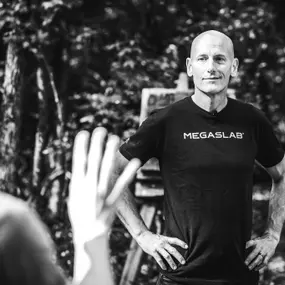
Seth is joined by Jason Adams, founder and CEO of MegaSlab, to challenge that long-standing practice. Jason argues that a properly designed, highly dense concrete system may limit water intrusion enough to reduce the need for entrained air.
Seth presses on the risks, including mix design, workability, finishing, curing, and specification requirements. Jason makes clear that he is not recommending contractors simply remove air from a standard mix. His approach depends on treating the concrete as a complete system.
The episode asks a practical question: Should exterior concrete be designed to give freezing water room to expand, or should the priority be keeping water out in the first place?
WHAT YOU’LL LEARN
- What air entrainment is intended to do during freeze-thaw exposure
- The difference between entrained air and naturally entrapped air
- Why Jason believes entrained air can reduce concrete density
- How dense concrete may limit water and chloride intrusion
- Why removing air from a standard exterior mix is not enough
- How aggregate packing and optimized mix designs affect permeability
- Why air-entrained concrete should not be hard-trowel finished
- How entrained air can affect workability and finishing
- Why specifications and established practices may resist this approach
- What field performance Jason has observed in Midwestern pavements
- Why mix design, placement, finishing, curing, and fibers must work as a system
CHAPTERS
(00:00) Introduction and support for the show
(03:24) Jason Adams and the air-void question
(04:56) Freeze-thaw testing and ASTM standards
(05:46) What air entrainment is designed to do
(07:26) Jason challenges the traditional approach
(08:52) Can dense concrete keep water out?
(11:37) Designing a mix without entrained air
(12:58) Why air-entrained concrete should not be troweled
(14:47) A problematic exterior pavement example
(16:23) Seth asks about the tradeoffs
(17:49) Workability, finishing, and industry pushback
(20:06) Protecting the concrete surface
(22:01) Why this must be treated as a complete system
(23:24) How to connect with Jason Adams
GUEST INFO
Jason Adams
Founder and CEO
Mega Slab
Guest link:
https://www.concretelogicpodcast.com/guests/jason-adams/
CONCRETE LOGIC ACADEMY
The people who understand concrete are the people who get listened to.
Not the loudest person in the meeting.
Not the person saying, “We have always done it this way.”
The person who understands why air, water, density, finishing, and curing affect performance usually has the most valuable voice in the room.
That is what Concrete Logic Academy is built for.
You get practical concrete education, professional-development courses, and real-world lessons connected to the topics covered on the Concrete Logic Podcast.
Start learning here: https://concreteschool.co
SUPPORT THE PODCAST
If the Concrete Logic Podcast gives you value, send a little value back.
You can support the show here:
https://www.concretelogicpodcast.com/support/
You can also support the show through the KUIU affiliate link:
https://www.concretelogicpodcast.com/kuiu
Interested in sponsoring the podcast or working with Concrete Logic Media?
Email Seth: seth@concretelogicpodcast.com
CREDITS
Producers: Jodi Tandett and Concrete Logic Media
Music by: Mike Dunton
https://www.mdunton.com/
WHERE TO FIND SETH
Concrete Logic Podcast:
https://www.concretelogicpodcast.com/
YouTube:
https://www.youtube.com/@concretelogicpodcast
LinkedIn:
https://www.linkedin.com/in/seth-tandett/
Concrete Logic Academy:
https://www.concretelogicacademy.com/
Until next time, let’s keep it concrete.
12:15 - Designing a mix without entrained air
Seth (00:00)
And welcome to another episode of the Concrete Logic Podcast. And today I have Jason Adams with Mega Slab. Jason's been on this show. this be his third appearance. I think you were you were one of the first ones, I think we'll make back in episode four, I think. Someone's gonna double check me on that. And then again, like around sixty, episode sixty. So this is gonna come out around
Think we're up to almost one this could be like 161, 162, I think. So yeah. So you're you hopefully you're not gonna wait another hundred episodes to to come back on the show again. But today, today Jason wanted to come on and talk about may a different approach to air and treatment. So I that we I I was thinking we hadn't really done an episode that's focused on air and treatment. So
Jason Adams (00:27)
Nice. Awesome.
Yeah, man.
Seth (00:48)
the the goal today would to explain what air entrainment is and then and what it's been used for. and Jason is going to share a a different approach to air entrainment. but before we get into that, I wanted to like I do on every episode, I wanna let you all know how you can support the show. the first thing to do is if you enjoy the show or you're learning from the show or and you think somebody else would enjoy the show.
Please share it. So share it with a colleague or coworker out there that you believe would value the show. the next thing you can do is if you go to concrete logicpodcast.com, you you can get a hold of me a couple ways. There's there's there's two ways. One is if you click on up at the top of the the net navigation bar, there's an ask Seth option. If you click on that email form pops up.
And what you can do is fill that out and what we're looking for is topic or guest suggestions. So a lot of our episodes are suggestions for folks that listen to the show. so that's what we're looking for. Topic or guest suggestion. the other the other way to get a hold of me on the same homepage, if you don't want to type out your message to me, there's a microphone in the bottom right hand corner and you can click on that and that'll record your message right off your computer.
or your cell phone, whatever you're using. and again, you can make a guest or topic suggestion. So that's just what the podcast is about. And we want to send out episodes you want to hear. So it's very helpful if you say, Hey, I want to hear a certain topic. I want to learn about a certain topic or hey, I want to h hear from a certain guest. and then the next way you can help out is on the same concrete logic podcast homepage is
There's a a a support button or donate button, depending on when you're listening to this, the button's been changing back and forth. But it it's a big blue button on the right hand side and you click on that and it goes to a PayPal page and you can donate to the show any amount that you feel that the show gives you value. So if you feel like it's five or twenty-five or fifty or five hundred, whatever it is, you can give that amount and you just fill that in. And any amount's greatly appreciated. And then the last way is if you enjoy the topics.
and you want to learn more and reinforce your learning in in the co in these concrete topics, check out concreteschool.co. So if you go to concreteschool.co, there that is a way for you to get to the concrete logic academy platform. So check check that out as well. and yeah, so that's it. I think so. I think that's all I'm gonna try to put you guys on today.
so Jason, let's roll into the topic. So the first thing let's talk about I guess could you explain what air entrainment is to get us kind of grounded and then we'll we'll take off from there.
Jason Adams (03:24)
Yeah, happy to so thanks for having me on today. I didn't know about your concrete school.co. I'm gonna have to check that out. That's pretty interesting. Yeah, pretty interesting. yeah, so I'm Jason Adams, the founder and CEO of Mega Slab, and I've enjoyed this concrete journey for quite some time, several decades now, and passionate about several topics as it comes to concrete, things I've learned, things I've explored.
Seth (03:30)
Yeah. Cool. Thank you.
Jason Adams (03:49)
you know, on my own journey. And one of them is airvoid structure or airvoid systems that are entrained or entrapped into concrete. And you know this the ASTM standards, right, for testing airvoid structures, specifically C ASTM C six six six
talks a lot about air void structures and how to test concrete. Basically put air in concrete, create a bunch of air bubbles, keep it within a range, and test it. freeze it, thought, freeze it, thought. You know, hundreds of cycles, right? This is done in a specific type of laboratory setting. trying to
you know, mimic exterior environmental conditions, harsh, very harsh environments. I would argue that
some of that lab testing and the frequency that it's done is not likely to happen in nature, but I digress. It's the it's the test and it's the triple six test and that's what was written and that's what we've all followed in the industry. I'm gonna stop there and say the most dangerous phrase in our language. We've always done it this way. So yeah. Yep.
Seth (04:56)
Yeah. So let's pause that real quick. So AS ASTM
C six six six, which I can't believe we have one of those. someone's got a sense of humor. Is my understanding is that's the lab test for resistance of concrete to rapid freezing and thawing. and then we have ASTM C two thirty one, which is the field air test, right? That's the one that we see the third party guy do.
Jason Adams (05:03)
Yep.
Seth (05:20)
gal. the the the it looks like bucket and then it's got a top and then it's got a a meter on the top of it. That's that's A A S T C two thirty one. Okay. and then well I I don't know if we'll talk about AS T C four five seven. H that's the hardened concrete air void analysis. I think that's what you were Kaian
Jason Adams (05:31)
I think so. Yep.
Seth (05:42)
kind of referring to but
Jason Adams (05:42)
I it's
it's more it's more about the freeze thaw durability.
Seth (05:46)
Okay. So free
thaw freeze thaw is what we're gonna focus on today. Okay. all right. So I guess yeah, it's let's let's explain that. So error entrainment is the actual act of purposely putting I'm gonna say admixture, but that's being it I've I mean I've seen guys put don soap and and concrete to make it happen. But
Jason Adams (05:50)
Yep. Yep.
Seth (06:08)
But what what the goal is right is to is to put these tiny little air bubbles throughout the concrete to make it more resistance to the freeze thought changes. So temperature changes around it. And the thought is is that these air bubbles are pushing out are or making the concrete more dense so water doesn't get in in there because if water is i w in the concrete.
when it's doing a free staw thing, essentially the you know, water freezes, so it's gonna expand and make the concrete crack. Is that right? Is that a right explanation or how would you explain it?
Jason Adams (06:40)
Yeah, so the the air voids that are basically installed in in the cement, you know, the paste, that's done through various means, like like you mentioned, on soap, a surfactant. you know, that's typically how it's done. There's other ways to entrain air in concrete, but that's typically how it's done is through surfactants. So so basically the theory is is that they're actually creating less dense concrete.
They are their air bubbles create less dense concrete. So the theory is that water will go in and when it goes in and it freezes, it needs a place to go. It needs a place to expand into. So it doesn't cause spalling, chipping, delamination, scaling, and all the things that happen to the surface of a pavement or slab, right? I I'm gonna I'm gonna push back on that theory.
Seth (07:06)
Right. Yep.
Jason Adams (07:26)
Right. I mean there's this is well documented in the industry. I mean it's not we're not the first to create plus that plus seven thousand PSI concrete, put it outside, not entrain air into it, and it not have an issue after four years of steel track abuse in the Midwest with the icing salts, brines, you know, all those things. So you gotta make really dense concrete. But putting air in it
makes it less dense. So it's this it's this conundrum. And again, it goes back to the phrase, we've always done it this way. I can't stand that phrase. Never liked it. Right?
Seth (07:59)
Yeah. Yeah.
Well, there's different w yeah. so just just a background. I d I I I I told you before you hit record incorrectly. I wanna correct at least between you and I. So so Aaron Traymant was introduced into the Congress industry in the nineteen thirties. it was or was discovered.
in the nineteen thirties and then and I guess in the forties they were they were trying to use it. and then in the fifties it was becoming more accepted in pavement and bridges and exterior concrete. and then I was sharing with you, I'm reading this concrete manual from nineteen sixty three. So by the time this thing was published, it was a well known practice, I guess. So the error entrainment's been around for qu quite some time over
almost a hundred years, I would say. So what you're saying is it the we might not be doing it the be the the best way, or are you saying we don't need it at all?
Jason Adams (08:52)
I I am saying that there is a method and a technique to to make concrete dense. And when you make concrete dense, water is unable to enter it. If water is unable to enter it, why do we need an air void structure?
in case water enters it to allow the water to expand. What I'm seeing is is that putting air in concrete reduces its life cycle. it makes it more permeable, more susceptible to
Chlorides and different CO2 attacks and all the things that happen with concrete to degrade it over time. I think air increases that. I think it reduces the life of it. Because we're all studying this phenomenon of water going into the concrete and needing a room to expand and contract. Expand and contract. It all goes back to the 666 test. Okay. So
What I'm saying is what if we took concrete and instead of putting air bubbles in it, what if we took as many air bubbles out as we could? Right, you're still gonna have some entrapped air, right, as you're mixing and the drum. You're not gonna really get rid of that. There's ways to defoam that and actually, you know, knock the air out, but you're sure gonna have some entrapped air.
Seth (10:02)
Mm-hmm.
Jason Adams (10:10)
So what if we made concrete slabs or pavements specifically so dense that that water's not getting into it?
I think that's just a new way of maybe thinking about it. And and we're not new in this. I I'm I'm not an inventor of, you know, no air exterior pavement, right? This has been done before. it's just not done enough. I think it needs to be done more. I think the industry needs to say, you know, yeah, we can make concrete more dense and remove air, not not put it in, but just not add that surfactant to the
Seth (10:32)
Mm-hmm.
Jason Adams (10:44)
to the concrete, right? Just it yes, it's gonna have some entrapped air, you know, two to three percent, one and a half to three, somewhere in that range. But we want to have really good place and finishing techniques and we want to cure it a prop, you know, proper way, right? I think this really comes down to
For for me and my focus it's exterior pavements, right? You could you could talk about air void structure and all types of other scenarios, you know, structural, below ground, pavements, interior slabs, whatever. But I'm s I'm focused on the exterior pavements side of things. And I'm just really focused on maybe the structural side as well. If there's water containment structures or, you know, below ground impermeable structures.
those those are also a a good opportunity to you know create dense concrete and not put that air void structure into it.
Seth (11:37)
Mm.
So do we need to replace I mean, when you do a mixed design, the air air is part of that design, correct? You calculate we talked about that, I can't remember which episode it was, but we did a couple episodes on going through how to do your own mixed design. so what is are you are you advocating to replace that or are you just upping the other ingredients of concrete
to make it more dense to take that that I guess that y y that that amount of air out of the out of the concrete.
Jason Adams (12:05)
Yeah, I'm saying don't design with it. you know, our process has always been better aggregate packing, you know, better density through
Optimized and refined mix designs. We've always done that. So that's certainly encouraged. What I'm saying is don't account for the year. I'm saying don't put it in the mix. I'm saying don't calculate for it. I'm saying make a really dense, durable mix design. cure it properly. Fibers are great. And
Seth (12:24)
Uh-huh.
Jason Adams (12:33)
You know, make it make it make water really work hard to get inside of it. Right? Increase the PSI. You know, th this is another thing. You you start to study s some of the pinning litigation that's out there. I'm gonna hit a I'm gonna hit a nerve with this one, but there's pinning litigation out there over air. Why? You know, it shouldn't be. It air is so tough to control from a ready mix producer standpoint.
Seth (12:38)
Yeah.
Jason Adams (12:58)
It's very if you're finishing the top of that slab or pavement at all with over four and a half, five percent of air in it, you're asking for a problem. I mean, I know an owner, this this boggled my mind. I visited this particular project in the Northeast, and they were putting air entrainment in their exterior paving, I don't know, six or seven percent air. and then they were trowel finishing it. Yeah.
Seth (13:19)
Which for
for the listeners that's a big no no. Then if it's a Yeah, yeah.
Jason Adams (13:23)
Yes. That's
a big no no. And when I tell you it was trial finished, I'm not even it wasn't even broomed later. It was trial finished. and it was outside. So yep.
Seth (13:34)
And wh J Jason, can you
educate us why you you don't trial finish an air and train mix?
Jason Adams (13:39)
Happy to. you know, trowel finishing is is sealing the surface.
It is closing up the surface. You you have a you know, a steel bladed machine, whether that's through a pan, a combo blade, a finishing blade, whatever blade you're using, sometimes plastic, but you're closing the surface up through pressing that machine down on the surface. It has you know, it has weight to it, density, and it's closing that surface up, right? So that's what I mean as far as trowel finishing,
a slab for those that don't know. For those that do know, I apologize. So when you do that you're trying to close the surface up. Well air is trying to do the opposite. The air void structure is trying to keep things permeable and open.
Well, you're trying to close it. So it's well documented. You can AI this, Google it, whatever, and and search, and you're gonna find that trowel finishing or finishing a a slab outside or inside with you know four and a half, five percent air and up, you are going to experience delamination and peeling and all the problems with with that technique. You're gonna experience that.
Seth (14:47)
Okay, sorry to derail you. So back to your story. North northeast project has six to seven percent error in it and and g continue, sorry.
Jason Adams (14:49)
No, all good.
Mm-hmm.
Yeah, no, all good. they were trial finishing it. And when I mean, you know, I've seen people and we've done this technique, but we don't put air in the concrete. We don't entrain or, you know, air into the concrete. So we finish the concrete to give it more durability, to increase abrasion resistance. You know, we have our own techniques to do that. these folks were actually just trialing it because
He I guess the owner liked that finish. but higher content, no brooming texture outside Northeast, you could imagine. they they they're having some issues with it. So I don't think many people are gonna go to that extreme, and they certainly are shaking their heads going, we don't ever do that. That's great. That's I tell you don't. don't do that. But you know, I think th the
the phase that I'm in and the
concept that we've already proven because these slabs have been on the ground for over four years, the ones I'm talking about in Iowa, Kansas, Missouri, to name a few, and they're performing very, very well. And we did not entrain air into them. So I I come, you know, to the podcast just to tell the industry, hey guys, air air can be an issue and it can be a bear. And you know, I think if we'll maybe rethink, you know
mix the signs and play some finishing techniques and curing and just create really, really dense concrete and stop being afraid of that six six six test that exists. you know, maybe there's a better way to create longer lasting pavements out there.
Seth (16:23)
Yeah. yeah, and then you it'd be one less test to argue about with the third party inspector as well. So so that's always an i an issue. less trucks turned away and so before people go out there and just say, Jason Adams says I don't need air in my concrete anymore Let's let's I mean there's gotta be a trade off here. So what's what's the trade off that we're doing if we're not in in air
Jason Adams (16:29)
That's right.
Okay.
Seth (16:47)
doing an air entrainment admix additive, I'm sorry.
Jason Adams (16:49)
Yeah, I mean I
Yeah, no, it's all good. I there's there's all kinds of pluses here, man. yeah. Yeah
Seth (16:55)
I know there's pluses, but there's gotta be a trade off. So it
I and the first thing that pops in my head would be I would say it's gonna be a little bit more expensive on the front end.
Jason Adams (17:06)
so typically I don't I don't know. I I think that's the the listeners should chime in and maybe add some comments, right? you know you have to you have to buy air entrainment and you get five to six percent less concrete, right? 'Cause you're buying air.
Seth (17:07)
Is that a fair statement?
Yeah, yeah.
Yeah. Well Air and Trayman
Air and Traymant is not very expensive. It's not expensive to put in. It's not like the the the sub producers out there are are making a fortune on Air and Treinment admixture. you are getting less concrete. Yeah. Which are I could insert a a a joke for our cement fun friends out there about getting less concrete, but I won't.
Jason Adams (17:25)
Yeah, I agreed.
Right. Right. But you are getting less concrete, so Yep. S Yes.
Yep.
Seth (17:49)
So what is what what is something to consider w if you're looking at a non errand trained mix for an exterior application pavement?
Jason Adams (17:52)
Я
Well,
first and foremost, people are gonna push back, right? I mean that's that's a negative there. I'm used to that. That's been I'm used to I'm used to taking arrows. So and I can take more, by the way. you know, it's people are gonna push back. They're just gonna say, Nope, we've been specular for this project or for this area of the country for the past, you know, thirty, forty years. Not doing that. So that's that's part of it.
Seth (18:01)
Yeah.
Jason Adams (18:20)
They're gonna push back. there is some there's sometimes you can get better workability with some air entrainment. Usually the concrete, you know, can flow and and finish a little bit easier. that varies, of course. Your your mileage may vary, right? But so you you may have to add a mid-range or a high range, you know, to get that workability back. but we're used to doing that anyways with our with our system. So we're okay with that.
yeah, and it's just a little bit different. So, you know, you probably like s when we've done some of this in some of the Midwest states, the finishing technique may change a little bit, right? we may want to introduce a power trial, a ride on, you know, and and a broom. And that's a little bit different for some folks that aren't used to that, right? but they get used to it pretty quick.
And the results for the owner are outstanding. Like I said, we've seen this three and four years later. It's like the surface is very, very durable. And you're seeing de icing salts and brines and steel track machines and all the things for years. And the surface is holding up great. So yeah, it's just it's a different way of doing things, but I I think the logic is if if if the listeners can just get their head wrapped around this,
concrete as a rigid porous sponge, but you can make it closer to quartz. You know, you you can make it more dense. And if you make it more dense, you're able to do this.
Seth (19:36)
Mm-hmm.
Or Yeah. Yeah.
I was gonna just jump in and Trump was talking about marble versus granite. He was g went on a thing about the other day. So g you know, marble is porous and granite is not porous. So he was saying how granite, granite is just to bring Trump in here to get maybe, you know, the al algorithms will algos out there will jump out there and say Concrete Logic Podcast talked about President Trump.
Jason Adams (19:53)
There you go.
Ha ha ha ha
Yeah.
Seth (20:06)
But anyways,
that's yeah, it's so yeah, you're making it more dense. And we've talked about this on on numerous episodes about protecting the surface of the concrete. That's where that's the the first guard, that's the first thing you wanna you know, maybe spend a little bit more of your resources on, because that is the the the gateway to having problems down the road, right? So if you don't protect the surface of the concrete and
You you know, things get in there and get once it's in the concrete, it's it's in there. So I mean, logically that that makes sense to me, Jason. And we're not we're th this wouldn't be the first time where we've gone against the the norm as far as ASTM and ACI standards out there. I mean, I've had Dr. Seiche on here a couple times and we were talking about how the ninety-minute rule is
kind of ridiculous. so there are some standards out there that I I think and that's kind of the purpose of this podcast is give folks a platform to challenge those things because you're definitely not gonna go onto an ACI podcast and challenge an ACI standard. At least I've I've never heard or seen that before. So so yeah that's a interesting approach. it so the it sounds like it
once you get past the hurdle of an i engineer accepting that there's a different way of approaching an exterior pavement with no air entrainment and it's educating your finisher on maybe a different approach and finishing, but excuse me, as as far as the the timing of getting on the slab, is there any difference there as well?
Jason Adams (21:36)
We haven't seen that, Seth. I think it just boils down to all the other elements that control set time and finishing. No. I I think it the environment, the temperature, you know, all the things that do really control set, we haven't seen it really change as far as taking air and training out. So yeah.
Seth (21:44)
Yeah.
All right. Well, did we we cover everything on air entrainment that you wanted to talk about today?
Jason Adams (22:01)
Yeah, I think so. I think I want to keep it simple. I I do want to say to the listeners that you know may be thinking about this or may say, Yeah, I want to try that. we've approached it as a system. So I am not saying that you can just take your standard four thousand mixes on that has air entrainment and just yank the air out and go put it down. I'm not saying that.
Seth (22:02)
Okay.
Jason Adams (22:21)
What I'm saying is is that there's a way to create very dense concrete through optimized mix designs, through finishing, through nanotechnologies, through curing. Fibers help too. and pull all that together as a system to address the root the root problem or create a material that's less dense.
So I'm not encouraging, like you said earlier, I'm not saying, you know, to the industry, run out and take your air out. Screw that air, right? I'm saying that, well, let's rethink it because we're proving it. And I love it. I don't want to put air in our slabs at all. Like I wanna kill every drop of air that I can.
Seth (22:50)
Uh-huh.
Jason Adams (23:03)
I want our our paving and our slabs to last way longer than me and way longer than you and everyone else listening to this. So I d I don't want I'm not I want to keep the air out. So that's that's kinda why I'm here to say. But you know, be careful, tread lightly, right? And if you get scared back into the triple six test maybe ask yourself why, right? So
Seth (23:24)
Yeah.
Well, cool. Well, if if folks wanna learn about that more, Jason, and what you're doing with your your Megaslab, what's the best way to reach out to you?
Jason Adams (23:33)
Yeah, that's thank you, Seth. A couple of different ways. I mean, we've got the typical website, megaslab dot com. We've got a contact, you know, link and box you can just fill out. You can email us at info at megaslab.com. We'll get right back to ya. And yeah, just look look forward to seeing the industry progress forward overall. I think, you know, ready mix producers, you know, you guys at Baker, the various, you know
awesome concrete subcontractors and design build firms that self perform, like all the folks that we're collaborating with. I just want to see the the industry get better. You know, whether they call us or not, it's okay. I wanna see the industry get better and the material last longer and let's leave something behind that's way better than how we found it. So
Seth (24:17)
Yeah. Yeah, that's
a awesome way to l end today. Jason, thank you for coming on the show today. Appreciate it. And folks, until next time, let's keep it concrete.
Jason Adams (24:23)
Absolutely.