America Built the Railroads Before It Knew What They Would Become
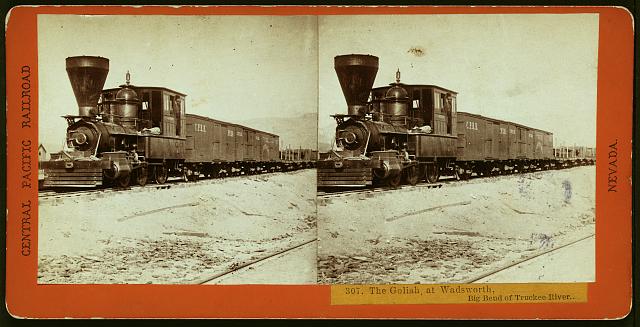
Just another quiet little infrastructure project. | Library of Congress
What happens when America decides it needs an entirely new kind of infrastructure?
At first, the answer is pretty simple.
Build it.
Build it fast.
Figure out the problems later.
That is more or less what happened with the American railroad system.
In 1830, the United States had roughly 31 miles of railroad.
By 1860, it had nearly 29,000 miles.
By 1890, the network had exploded to more than 160,000 miles.
In just a few generations, Americans watched a completely new infrastructure system spread across the country.
Towns wanted it.
Investors funded it.
Politicians promoted it.
Workers poured in to build it.
And the federal government helped make it happen.
The railroad was going to change everything.
And it did.
Every Town Wanted the Railroad
It is easy today to look at the railroad boom and think everyone must have been fighting the projects.
That wasn't really how it started.
For many communities, getting a railroad was viewed as an economic necessity.
A railroad connection meant access to larger markets.
Farmers could ship crops farther.
Manufacturers could reach new customers.
People could travel faster.
Mail moved faster.
Goods became easier to obtain.
Land near the railroad could become more valuable.
A town that got a railroad station might grow rapidly.
A town that was bypassed might struggle.
So towns competed.
Local governments issued bonds.
Communities donated land.
States granted charters.
Politicians promised economic growth.
The argument was straightforward.
If we don't get the railroad, somebody else will.
And if somebody else gets it, the growth may go there instead.
The Federal Government Wanted It Too
The railroad boom was not simply a group of private companies deciding to lay track across America.
Government was deeply involved.
The Pacific Railway Act of 1862 helped launch the first transcontinental railroad during the Civil War.
The federal government provided land and government-backed financing to support construction.
Railroad companies received alternating sections of public land along their routes.
Eventually, Congress granted roughly 174 million acres of public land for railroad development.
That is an astonishing number.
The theory was that the railroad wasn't just a private investment.
It was national infrastructure.
It could move troops.
It could carry mail.
It could connect distant territories.
It could encourage settlement.
It could open new markets.
And perhaps most importantly, government leaders believed the country needed the infrastructure faster than private capital could build it on its own.
So government helped reduce the risk.
Then the Money Started Pouring In
Once the growth became obvious, investors wanted a piece of it.
Railroad stocks and bonds became some of the most important investments in America.
Banks financed projects.
Wall Street sold railroad securities.
European investors poured money into American railroads.
Regular citizens bought railroad investments.
New companies formed everywhere.
Some companies built long-distance systems.
Others existed to construct relatively short sections of track.
Companies merged.
Companies bought one another.
Companies leased track from one another.
Companies reorganized.
And companies failed.
A lot of them failed.
That is one of the parts of railroad history that gets forgotten.
We remember the railroad network.
We remember Union Pacific.
We remember the transcontinental railroad.
What we don't remember are all the companies that disappeared while the system was being built.
Build First. Find the Demand Later.
Railroad construction became speculative.
Companies increasingly built lines based on what they believed would happen in the future.
A railroad could be built through relatively undeveloped territory because investors expected towns, farms, mines and factories to eventually appear around it.
Sometimes that worked brilliantly.
Sometimes it didn't.
Railroads required enormous amounts of capital.
Tracks had to be laid.
Bridges had to be constructed.
Land had to be acquired.
Locomotives and rolling stock had to be purchased.
Stations had to be built.
Workers had to be hired.
All of that happened before anyone knew exactly how much freight or passenger traffic a particular line would eventually generate.
The assumption was that growth would catch up.
For a while, investors were willing to believe it.
Then the Panic of 1873 hit.
Excessive railroad investment was one of the major contributors to the financial crisis.
Projects had been built ahead of demand.
Debt levels were high.
Returns disappointed investors.
Money stopped flowing.
Railroads failed.
The infrastructure may have made sense.
The financing didn't always.
Who Actually Built All This?
Another problem appeared quickly.
America needed an enormous workforce.
Thousands of immigrants provided it.
Irish, German and Italian immigrants worked on railroad construction.
Union Pacific employed thousands of immigrant workers as it pushed west from Omaha.
Central Pacific turned heavily to Chinese labor while constructing the railroad through California and the Sierra Nevada.
Eventually, Chinese workers made up the overwhelming majority of Central Pacific's construction workforce.
The work was brutal.
Workers blasted tunnels through mountains.
They built bridges.
They graded roadbeds.
They worked around explosives.
They dealt with extreme weather.
Accidents were common.
Deaths were common.
Railroad construction wasn't just a technological achievement.
It was an enormous labor operation.
And once the railroads were operating, the safety problems didn't disappear.
By the late nineteenth century, thousands of railroad employees and members of the public were being killed or injured in railroad accidents.
The country wanted the infrastructure.
Someone still had to build it and operate it.
Then People Started Asking Different Questions
Early in the railroad boom, the question was:
How do we get a railroad here?
A few decades later, the question had changed.
Why does the railroad have so much power?
That shift is the whole story.
Once the railroad became essential, communities discovered something.
If your town had one railroad, that railroad controlled your connection to the national economy.
A farmer might depend entirely on it to get crops to market.
A manufacturer might depend on it to receive materials and ship products.
A merchant might depend on it to receive inventory.
And the railroad controlled the price.
Large customers could sometimes negotiate better rates.
Small customers couldn't.
Railroads offered rebates to favored businesses.
Some charged different customers different prices for essentially the same transportation.
In certain cases, shipping something a short distance could cost more than shipping it farther because competition existed on the longer route.
Farmers became particularly angry.
They needed the railroad.
But they increasingly believed the railroad was taking advantage of that dependency.
They weren't necessarily against railroads.
They were against how railroad power was being used.
The Public Backlash Arrived
By the 1870s, railroad monopolies were becoming a major political issue.
Farmers organized.
Newspapers attacked railroad companies.
The Granger movement pushed states to regulate freight rates.
Illinois, Wisconsin, Iowa and Minnesota passed laws attempting to control railroad pricing and business practices.
Politicians began talking about railroad monopolies.
Railroad executives became symbols of concentrated corporate power.
Names like Jay Gould, Cornelius Vanderbilt and Collis Huntington became famous.
Or infamous.
Depending on who you asked.
The term "robber baron" became associated with men who accumulated enormous wealth while controlling industries that ordinary citizens increasingly depended on.
The railroad had gone from symbolizing progress to symbolizing corporate power.
Sometimes it represented both at the same time.
And Then Came the Scandals
Railroads were receiving government assistance.
Politicians were involved in railroad policy.
Investors were making fortunes.
That combination eventually produced corruption.
The Crédit Mobilier scandal became one of the biggest political scandals of the nineteenth century.
Union Pacific insiders controlled a separate construction company called Crédit Mobilier.
That company charged Union Pacific inflated construction costs.
Money flowed through the arrangement.
Railroad interests distributed valuable shares to influential members of Congress.
Congress eventually investigated.
Members of the federal government were implicated.
The scandal shocked the country.
People began asking an uncomfortable question.
Was government supporting necessary infrastructure?
Or was government creating opportunities for politically connected people to get rich?
Sometimes the answer appeared to be both.
Congress Started Holding Hearings
As complaints grew, government officials wanted answers.
Congress began investigating transportation costs, railroad rates, monopoly power and competition.
Senator William Windom led a major transportation investigation, which examined railroad rates, transportation costs, railroad monopoly power and the relationship between railroad companies and the federal government, beginning in the 1870s.
Congress heard from railroad executives.
Farmers.
Shippers.
Merchants.
Transportation experts.
Government officials.
Business owners.
Another major Senate investigation followed in the 1880s under Senator Shelby Cullom.
Thousands of pages of testimony accumulated.
This wasn't some fringe political debate.
The railroad had become one of the biggest economic questions in the country.
Everyone agreed the infrastructure was important.
The argument was over what happened once the infrastructure became essential.
Eventually Washington Changed the Rules
In 1887, Congress passed the Interstate Commerce Act.
Railroad rates were required to be "reasonable and just."
Secret rebates were restricted.
Discriminatory pricing was targeted.
The Interstate Commerce Commission was created.
It became the first independent federal regulatory commission in American history.
Think about that.
One of the foundations of the modern federal regulatory system grew directly out of the railroad boom.
The government had helped encourage railroad construction.
Then the country became dependent on the railroads.
Then people complained about railroad power.
Then Congress investigated the industry.
Then Washington created a regulator.
The policy evolved along with the infrastructure.
But Here's the Strange Part
For all the controversy, the railroads worked.
Freight costs fell dramatically.
Farmers gained access to distant markets.
Manufacturers could sell nationally.
Travel times collapsed.
Goods moved farther and cheaper.
Regional economies became connected.
New industries developed.
Cities grew.
Entire sections of the country became economically viable because transportation costs had fallen enough to make development possible.
Americans benefited enormously from the railroad network.
They just didn't necessarily benefit equally.
Some towns boomed.
Others were bypassed.
Some investors became extremely wealthy.
Others lost everything.
Some railroad companies became enormous.
Others went bankrupt.
Workers found jobs.
Workers were also injured and killed.
Farmers gained access to national markets.
Those same farmers became dependent on companies they believed had too much pricing power.
The railroad story is not really a story about whether infrastructure was good or bad.
It is a story about what happens when transformative infrastructure gets built very quickly.
And Maybe That's the Part Worth Paying Attention To
The railroad boom had a familiar pattern.
A new infrastructure system appeared that promised enormous economic benefits.
Communities competed to attract it.
State and local governments supported it.
The federal government created incentives.
Investors rushed into the market.
Companies raised enormous amounts of capital.
Construction happened ahead of proven demand.
Thousands of workers were needed.
Entire supporting industries grew around the buildout.
Some companies became enormously valuable.
Others failed.
People initially focused on the benefits.
Later they began asking about land, resources, infrastructure demands, government subsidies, corporate power and who was actually benefiting.
Then came investigations.
Then hearings.
Then regulation.
And eventually consolidation.
None of that meant the railroad was a failure.
Quite the opposite.
The railroad transformed the United States.
But America didn't fully understand what it was building when construction started.
It built the network first.
Then spent decades dealing with everything that came with it.
Which raises an interesting question for us today.
Are we watching another infrastructure boom follow the same path?
Look around Virginia and much of the rest of the country.
Communities are competing for projects.
Governments are offering incentives.
Billions of dollars are being invested before future demand can be known with certainty.
New electrical infrastructure is being built.
Land is being acquired.
Construction labor is being pulled into booming markets.
Politicians are promising economic growth.
Residents are starting to ask questions about power, water, land use and incentives.
Investors are betting that demand will continue growing for decades.
And congressional hearings have already begun.
This time we aren't laying railroad tracks across America.
We're building data centers.
The technology is different.
The pattern might not be.

Editor-in-Chief, Concrete Logic
Seth Tandett is based in Richmond, Virginia, and has spent years working in the concrete construction industry across central and southern Virginia. His experience includes structural concrete work on multi-level frames, data centers, federal facilities, and other large-scale projects.
Today, Seth works in business development for Baker Construction and hosts the Concrete Logic Podcast, where he asks direct questions about what is really happening in the concrete industry.
Outside of work, Seth spends time studying economics, reading American history, and hunting waterfowl.
On the Concrete Logic Podcast, Seth brings the same approach he uses in the field: ask better questions, challenge weak answers, and focus on what actually matters in concrete.
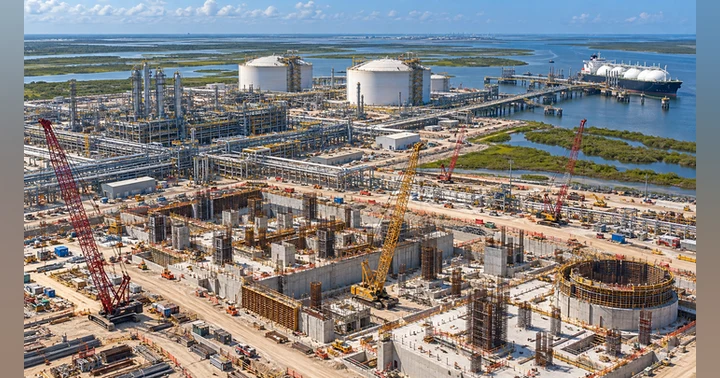
How Did America Become the World's Largest LNG Exporter?