Why Are We Asking Concrete Crews to Fix a Productivity Problem They Didn’t Create?
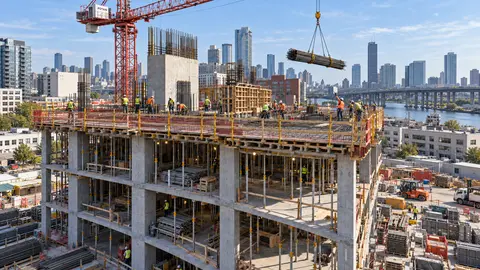
Why do we spend months developing a construction schedule without the people who are actually going to build the concrete work?
Then we finally award the concrete package and tell the contractor, “Here is the schedule. We need you to hit these dates.”
I have seen some version of this throughout my career. The owner wants to move quickly. The general contractor is trying to finish design, establish a GMP, buy out the job and keep everyone happy. The concrete package goes through multiple rounds of pricing and scope review. Maybe the project is waiting on drawings. Maybe procurement wants another bidder.
Meanwhile, the schedule keeps moving.
Eventually the concrete contractor gets the award, but the start date did not move with it. Three months of planning time disappeared and somehow became the concrete contractor’s problem.
Then we start talking about productivity.
Maybe the problem isn't productivity. Maybe we waited too long to make a plan.
The Schedule Is Usually Written Before the Concrete Plan
There is nothing wrong with setting an aggressive schedule. Contractors deal with aggressive schedules every day.
The problem comes when the schedule is treated as fact before anyone has determined how the concrete work will actually be built.
A schedule might say we are going to pour one elevated deck every seven days. Great. But what forming system are we using? How much formwork do we need? When can we strip it? What strength does the concrete need before we cycle the forms? How congested is the reinforcing? Where is the placing boom going?
Those are not details to figure out later. Those questions determine whether the seven-day cycle exists in the first place.
You can type seven days into scheduling software in about ten seconds. Building a repeatable seven-day concrete cycle might require months of planning.
There is a difference.
Bring the Builders In Before the Schedule Hardens
Owners and general contractors have a tremendous opportunity during preconstruction that sometimes gets wasted.
Bring the concrete contractor in while there are still decisions to make.
That does not necessarily mean awarding the entire contract early. Owners can maintain competition, negotiate pricing and go through their normal procurement process. But somebody who understands how the work will actually get built needs to be involved.
Ask the concrete contractor to review the structure, sequence and forming plan. Ask what looks difficult. Ask what could slow production.
Then bring the suppliers into the conversation where appropriate.
The ready-mix producer knows what its plants can produce, what materials are available and what delivery rates are realistic. The reinforcing supplier knows fabrication capacity and lead times. The formwork supplier knows what equipment is available and how much is required to maintain the desired cycle.
These people know things that a CPM schedule does not.
Use them.
A Schedule Is Only as Good as the Production Plan Behind It
Say the project has a 2,000-yard mat foundation.
The schedule identifies the placement date and everyone works backward from it. Then somebody finally calls the ready-mix producer.
Can one plant supply 2,000 yards at the production rate the placement requires? Does the producer need two plants? How many trucks are required? What are the haul times? Where are those trucks entering and exiting? Is there room for two pumps?
What happens if the schedule assumes 150 yards per hour but the site can realistically handle 80?
That is not a concrete crew productivity problem.
You built a schedule around a production rate the project cannot physically support.
The same thing happens with elevated structures. Maybe the schedule calls for a seven-day floor cycle, but the forming system, reinforcing congestion, embed layout or concrete strength requirements say otherwise.
A contractor brought in early may be able to change pour breaks, adjust sequencing, increase formwork or identify a design condition that slows the entire cycle.
Maybe spending more money on formwork saves three weeks on the structure. Maybe it doesn't.
That is why you want the conversation early.
Once reinforcing is fabricated, formwork is purchased and crews are mobilized, most of those options disappear.
Then our primary tool becomes adding people.
More People Does Not Automatically Equal More Production
When we get behind, we immediately ask the subcontractor to add manpower.
Sometimes that works. But 60 people do not necessarily accomplish twice as much as 30 when all 60 are trying to work in the same area.
Concrete work requires flow.
Formwork has to stay ahead of reinforcing. Reinforcing has to stay ahead of embeds and inspections. Layout has to stay ahead of everyone. Concrete deliveries have to match the rate the crew can place and finish.
You cannot manpower your way through a late reinforcing delivery. You cannot overtime your way around a batch plant that cannot produce enough concrete. You cannot add another finishing crew if there isn't enough room for them to work.
There are physical limits to the work.
Planning helps you find them before the schedule finds them for you.
Waiting Is Getting More Expensive
There is another cost to delaying the concrete award that is getting harder to ignore.
Prices do not sit still while the project is deciding.
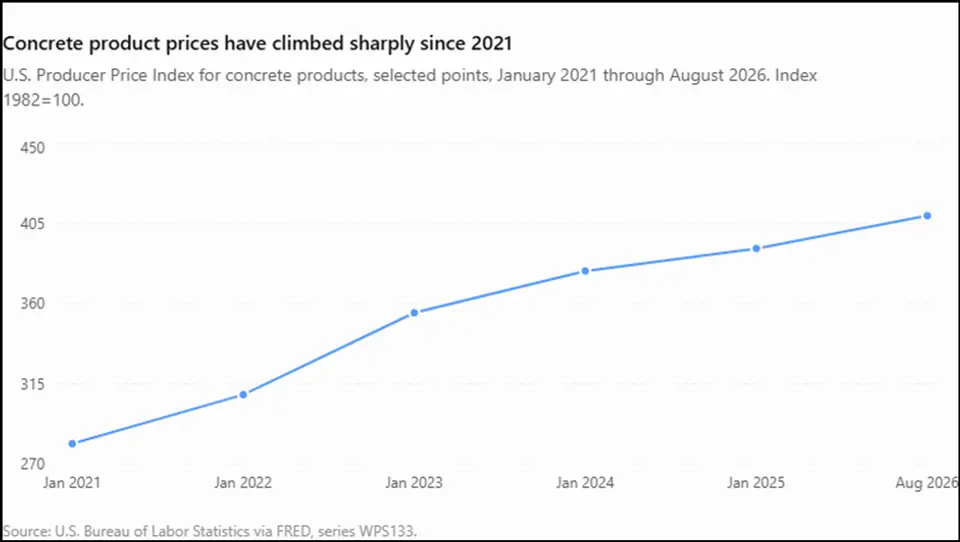
According to the U.S. Bureau of Labor Statistics Producer Price Index, concrete products have increased substantially since 2021. The index was around 281.5 in January 2021 and reached more than 409 by August 2026.
That is roughly a 45% increase.
And that is only part of the story.
Steel moves. Aggregates move. Cement moves. Admixtures move. Equipment moves. Labor moves.
Then there is fuel.
If you have looked at diesel prices lately, they have taken the escalator to the top floor.
Ready-mix trucks burn diesel. Concrete pumps burn diesel. Excavators burn diesel. Cranes, generators and the trucks delivering reinforcing and formwork all need fuel somewhere along the line.
I recently wrote about what is driving diesel prices and why concrete producers are passing some of those costs through with fuel surcharges in Would Banning Diesel Exports Actually Lower Diesel Prices?.
So when an owner or GC spends another two or three months trying to finalize a package, the price you received in June may not be the price available in September.
Waiting has a cost.
Sometimes it shows up in escalation. Sometimes it appears as a fuel surcharge. Sometimes the supplier simply tells you the original price is no longer available.
Buying the Job Well Can Still Cost the Project
Everybody wants to buy the job well. They should.
Owners should expect their general contractor to protect their money, and general contractors should negotiate hard with subcontractors.
But there is a point where squeezing the last dollar out of a package can cost more than it saves.
Imagine spending another six weeks negotiating a concrete package to save 2% or 3%.
Maybe the negotiation is worth it. But what happened during those six weeks?
Did material pricing increase? Did the contractor lose its preferred forming system? Did reinforcing procurement get delayed? Did the ready-mix producer fill its available capacity with another project? Did the mobilization date stay exactly where it was?
We rarely put a price beside lost planning time during procurement.
We should.
A lower subcontract value does not necessarily mean a lower project cost.
The Ready-Mix Producer Should Not Get a Surprise Phone Call
A major project might require tens of thousands or even hundreds of thousands of cubic yards of concrete, yet meaningful conversations with the producer sometimes happen surprisingly late.
That makes no sense.
A producer has a certain number of plants, trucks, drivers and people. Cement has to be available. Aggregates have to be stockpiled. Admixtures have to be supplied. Plants have to be maintained.
If your project needs several thousand yards per week, that demand needs to be understood early, especially when multiple large projects are competing in the same market.
The question isn't simply, “Can you sell us concrete?”
The better question is, “Can the local market support the production plan we have built into this schedule?”
Those are two very different questions.
Planning Does Not Slow the Project Down
There is a fear on fast projects that more planning means more meetings, more discussion and ultimately less speed.
Bad planning can certainly become that.
Good planning eliminates decisions later.
Where will the pumps sit? How much formwork do we need? What production rate can the ready-mix supplier support? Where will reinforcing be prefabricated? Which placements are most difficult? What inspections are required? How much concrete can the site actually receive?
Make those decisions when they are cheap.
Answer those questions before there are 150 people standing on the project waiting for an answer.
That is how planning creates speed.
Give the Concrete Contractor Something Besides a Deadline
Owners want predictability. General contractors want control of the schedule. Concrete contractors want production.
Those interests are not in conflict.
The best concrete contractors want to move quickly because production is how they make money. They do not make money by keeping crews and formwork sitting on a project longer than necessary.
Bring them into the conversation early enough to help develop the plan instead of handing them a plan somebody else developed. Let the ready-mix producer tell you what production is realistic. Let the reinforcing supplier talk about fabrication. Let the formwork people challenge the cycle.
Then establish the schedule.
Weather will happen. Drawings will change. Trucks will break. People will miss things.
That is construction.
But there is a huge difference between responding to normal construction problems and starting the project with a plan that was never realistic.
If concrete is important to the schedule, treat the concrete team like they are important to the schedule.
Bring them in earlier. Give them time to plan and buy the materials. Listen when they tell you something will not work.
Then hold them accountable for the plan they helped build.
That seems a lot more productive than waiting until the last minute, paying more for the same materials, handing them a compressed schedule and asking why they cannot go faster.

Editor-in-Chief, Concrete Logic
Seth Tandett is based in Richmond, Virginia, and has spent years working in the concrete construction industry across central and southern Virginia. His experience includes structural concrete work on multi-level frames, data centers, federal facilities, and other large-scale projects.
Today, Seth works in business development for Baker Construction and hosts the Concrete Logic Podcast, where he asks direct questions about what is really happening in the concrete industry.
Outside of work, Seth spends time studying economics, reading American history, and hunting waterfowl.
On the Concrete Logic Podcast, Seth brings the same approach he uses in the field: ask better questions, challenge weak answers, and focus on what actually matters in concrete.

Would Banning Diesel Exports Actually Lower Diesel Prices?