America Has Plenty of Natural Gas. So What's Holding Up the Power?
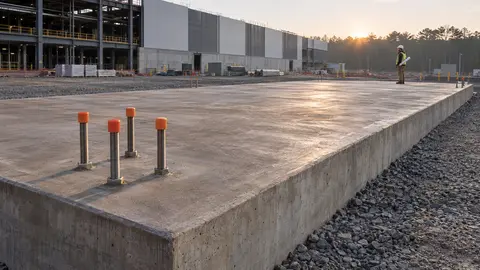
The pad’s ready. When’s the turbine showing up?
Last week, I was walking a data center site and couldn't stop thinking about the infrastructure we're building to keep these facilities running. Power plants, substations, transmission lines. Back in May 2024, I made the case for nuclear and natural gas in Virginia because we need power on a still night, too. Walking that site, I kept thinking about how much has to get built before somebody can flip the switch.
Around the same time, I was reading about something that sounded a little crazy: companies taking the technology inside old aircraft engines and putting it to work generating electricity on the ground.
That sent me down a rabbit hole about natural gas, LNG, and gas turbines. They're related, but they're not the same thing. And the difference helps explain the scale of today's industrial construction.
Here are five questions worth answering:
- If America has so much natural gas, why are we building more infrastructure to use it?
- What's the difference between natural gas and LNG?
- What does a gas turbine actually do?
- Why are companies looking at old aircraft engines to make electricity?
- What does any of this mean for the people building these projects?
First, we have a lot of natural gas
Natural gas is a fuel, mostly methane, that comes out of the ground. Some comes from gas wells, and some is produced alongside oil. Appalachia, the Haynesville, and the Permian Basin are major American sources.
The U.S. Energy Information Administration expects American gas production to reach record levels in 2026 and 2027.
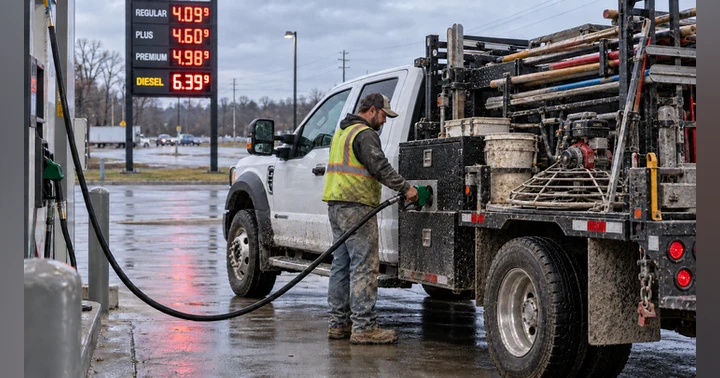
But prices vary by region. A producing area can have more gas than its pipelines can move, even while a utility elsewhere struggles to secure supply. Having plenty of a resource and getting it where you need it are two different problems.
Think of a concrete plant with plenty of cement in the silo but no trucks available to make deliveries. Inventory isn't the same as usable capacity.
LNG is natural gas packed for a trip overseas
LNG stands for liquefied natural gas. It isn't a different fuel. It's natural gas cooled to about minus 260 degrees Fahrenheit, where it becomes a liquid and takes up roughly 1/600th of its original volume. Now it can be shipped overseas. Here's the Department of Energy's explanation.
An LNG terminal is basically a giant refrigeration and shipping operation. Gas arrives by pipeline, gets cleaned and cooled, and is stored before being loaded onto specialized ships. Overseas, it can be warmed back into gas and used as fuel.
In April 2025, I wrote about gas that oil producers used to burn off and how valuable that fuel had become. Now we're building entire terminals so we can sell it across an ocean. The EIA reports that U.S. LNG exports averaged 17.4 billion cubic feet per day during the first half of 2026, up 23% from the same period a year earlier.
An LNG terminal also needs major foundations, equipment pads, pipe racks, and underground utilities before the first ship leaves the dock.
In a recent Concrete Logic episode with Joey Goscha of Baker Construction, we discussed a project involving 585,000 cubic yards of concrete. Think about what it takes to place that much material.
A gas turbine is a machine, not a fuel
This is where the terminology gets confusing.
A gas turbine is an engine. In a power plant, it compresses air, mixes it with fuel, and burns the mixture. The hot gases spin blades that drive a generator. That's how it makes electricity. Here's the Department of Energy's explanation.
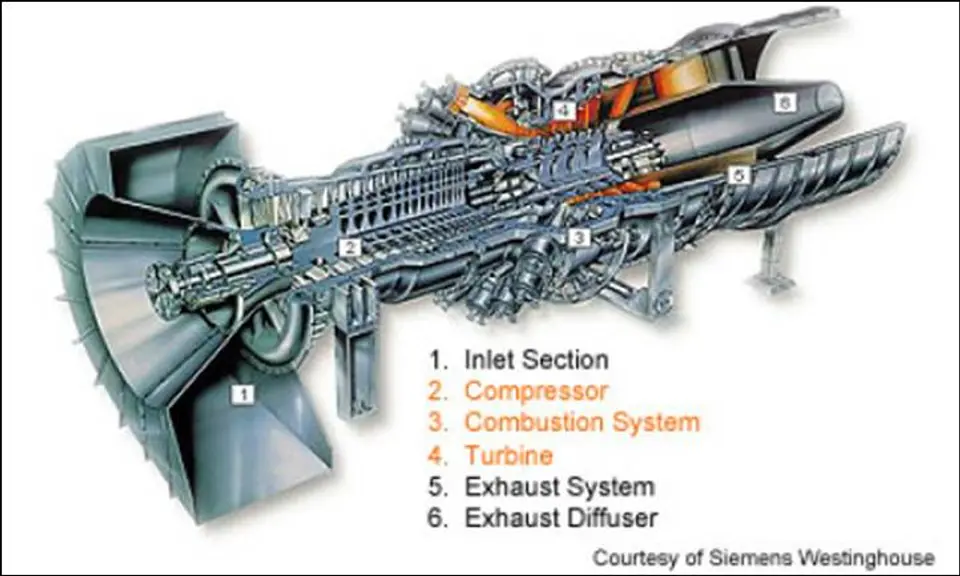
Some plants use the hot exhaust to make steam and more electricity. That's combined-cycle generation, which gets more out of the same fuel.
Say I'm standing next to a gas turbine on a jobsite. My first question is, what's it turning? At a power plant, it turns a generator. At an LNG terminal, it might turn the compressor that helps cool the gas for the trip overseas. Some terminals use electric motors for that job.
We can produce the gas faster than we can build all the machines
In February 2025, we looked at why data center developers wanted to generate power on-site. Waiting years for a grid connection didn't fit their schedules. Say you decide to build your own gas plant. How soon can you get a turbine?
Here's the catch. Large gas turbines aren't sitting on a shelf. Manufacturers have substantial backlogs. In October, GE Vernova reported 122 gigawatts of gas-power equipment backlog and reserved manufacturing slots. Some are reservations, not firm orders, but the demand for manufacturing capacity is obvious.
So we can have gas, willing customers, and a construction site, yet still wait years for the machine that turns fuel into power.
So why are people talking about jet engines?
Because a jet engine and a power-generation gas turbine are closer relatives than most people realize.
An aircraft engine uses a gas turbine to produce thrust. Adapt the technology to spin a generator, and you can produce electricity. These aeroderivative turbines aren't new, but demand for them is growing.
FTAI Aviation is taking CFM56 aircraft-engine technology and adapting it into a ground-based turbine called the Mod-1.
FTAI reported that its unit met testing targets of 23 megawatts of continuous power, with more than 100 units under contract for planned 2027 and 2028 deliveries. These are reported test results and plans, not operating data from 100 installed turbines. Here's its earnings release.
Nobody's rolling a jet engine off the runway and plugging it into a data center. These units still need generators, controls, fuel supply, and safety and emissions systems.
But getting smaller generating units online sooner can be valuable to customers waiting on power.
What should concrete contractors take from all this?
An industrial project's schedule may be driven by a turbine delivery date decided long before a concrete subcontractor sees the drawings.
Say the turbine supplier owes us an anchor bolt layout on Monday so we can pour on Friday. The layout shows up Thursday afternoon. Come Friday, somebody's going to ask the superintendent why we haven't poured yet.
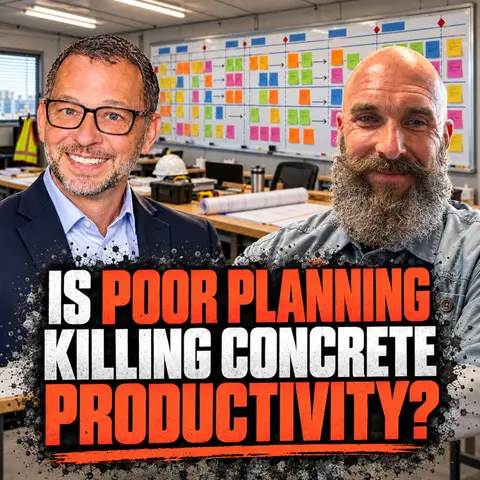
That's the kind of planning problem I talked about with Daniel Megason of Baker Construction in EP #174, Is Poor Planning Killing Concrete Productivity? We recorded it at the Lean Construction Institute Congress in Atlanta. What I like about pull planning on a job this size is that the concrete foreman gets to say, “If you want me to pour Friday, here's what I need by Monday.” Now the person who owes him that layout knows exactly who's waiting on it.
There's also a bigger question: Are we building the right amount? I don't know. Today's demand looks real, but forecasts aren't purchase orders, and not every announced data center will be built. Who pays for the infrastructure if expected users don't show up?
I hope that if we eventually decide we overbuilt, some of that generation and grid capacity can benefit everyone else. It won't happen automatically, especially with infrastructure built for one site. But it's worth thinking about now.
My takeaway: having the fuel is only the beginning. Turning it into electricity or moving it across an ocean takes machines, planning, and enormous amounts of construction.
And, as usual, a whole lot of concrete.
Related listening: EP #171: 585,000 Yards of Concrete: Building a Massive LNG Plant with Joey Goscha.
EP #174: Is Poor Planning Killing Concrete Productivity? with Daniel Megason.
Further reading: This explainer was prompted in part by Doomberg's November 4, 2026 article "Recycle Bin". The technical and market details above are linked to U.S. government sources and manufacturers' primary disclosures.

Editor-in-Chief, Concrete Logic
Seth Tandett is based in Richmond, Virginia, and has spent years working in the concrete construction industry across central and southern Virginia. His experience includes structural concrete work on multi-level frames, data centers, federal facilities, and other large-scale projects.
Today, Seth works in business development for Baker Construction and hosts the Concrete Logic Podcast, where he asks direct questions about what is really happening in the concrete industry.
Outside of work, Seth spends time studying economics, reading American history, and hunting waterfowl.
On the Concrete Logic Podcast, Seth brings the same approach he uses in the field: ask better questions, challenge weak answers, and focus on what actually matters in concrete.
Who Really Pays for Construction Change Orders?