Would Banning Diesel Exports Actually Lower Diesel Prices?
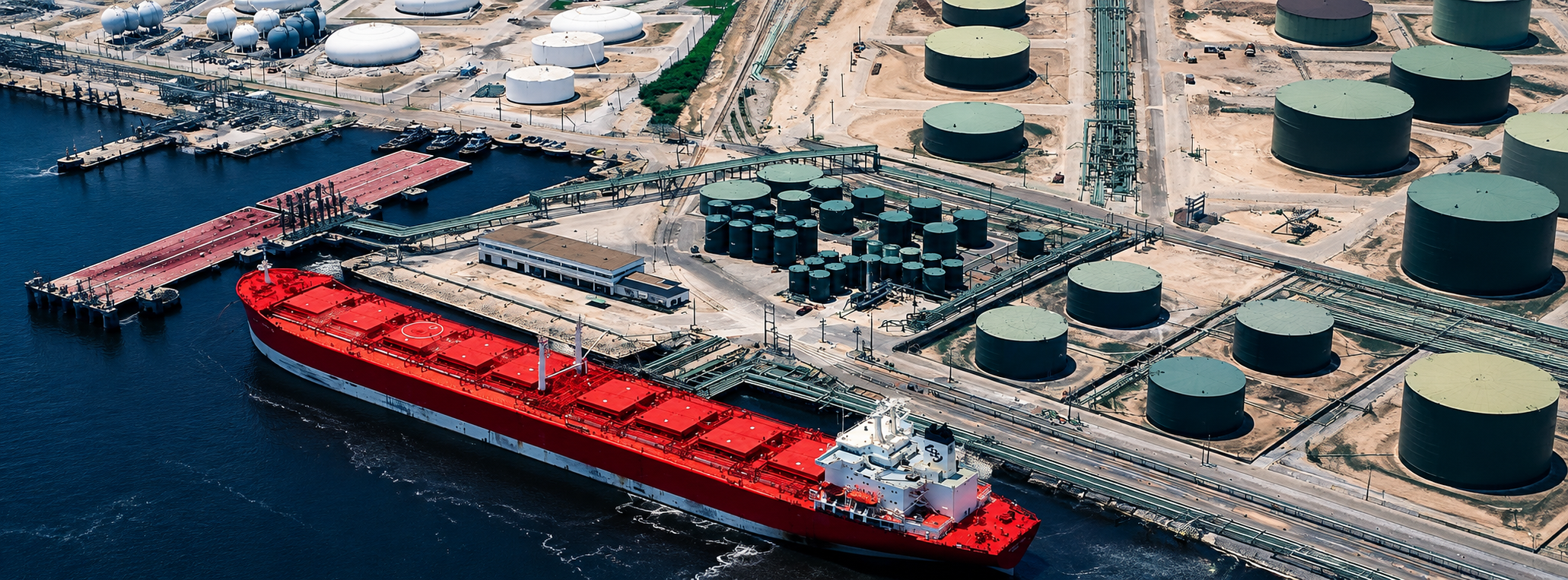
More going than staying. | Photo credit: Endress+Hauser
Have you looked at the price of diesel lately?
The national average has pushed past $6 per gallon. Tight global supplies of diesel and other distillates, combined with higher crude oil prices, are driving the increase. U.S. refineries are running hard, yet inventories remain below normal.
If you're in concrete construction, you don't need me to tell you diesel prices are up.
You're probably already paying for it.
Many ready-mix producers have fuel surcharges that move on a sliding scale with diesel prices. As diesel crosses certain price thresholds, the surcharge moves with it.
Some of you reading this are seeing those charges on your projects right now.
Others are the producers sending the invoices.
Either way, somebody has to pay for it.
So what's driving diesel this high?
And if the United States produces and refines enormous amounts of petroleum, why are we exporting diesel while we're paying these prices at home?
Why not keep it here?
We Don't Have Enough Diesel
Here's my simple way of thinking about this.
Crude oil and diesel aren't the same thing.
You can't put crude oil into a Peterbilt. It has to go through a refinery and be converted into diesel, gasoline, jet fuel and other products.
So diesel prices aren't just about the price of oil.
They're also about our ability to refine it.
And right now, the world has a refining problem.
A number of Russian refineries have been hit recently, taking additional refining capacity out of an already tight market. Middle Eastern refining and exports have also been disrupted.
American refiners are responding. U.S. distillate production has been running at some of its highest levels in years, and refineries have been operating near capacity.
Despite that production, distillate inventories remain tight.
That's a supply problem.
So Why Are We Exporting Diesel?
Because the rest of the world needs it too.
When diesel supply disappears somewhere else, those buyers don't disappear.
They look somewhere else for fuel.
The United States happens to be one of the places that has it.
That means foreign buyers are competing for American diesel at the same time American inventories are tight.
Which naturally raises a question:
Why don't we keep more of it here?
At the time I'm writing this, President Trump is considering exactly that. He has publicly backed restricting U.S. diesel exports, while his administration considers what that might look like. By the time you read this, there may already be a decision.
Energy Secretary Chris Wright is pushing back on a blanket ban.
I respect Wright, and his argument makes sense to me.
The oil industry is making a similar case.
Here's the problem.
American refineries produce more diesel than the U.S. market normally consumes. Take away the export market and eventually refiners run out of places to put all of that diesel.
Then what?
They throttle back refinery runs.
And refineries don't just make diesel. They're also producing gasoline, jet fuel and other products.
So a policy intended to increase diesel supply could eventually cause refiners to produce less fuel overall. Wright has warned that this could push gasoline and jet-fuel prices higher and ultimately work against the goal of lowering fuel prices.
Keep the Diesel Here
Here's the simple logic as I see it.
In the short term, keeping a barrel of diesel that was headed overseas in the United States increases domestic supply.
Assuming demand doesn't change, prices should fall.
But we haven't produced another gallon.
We've just changed who gets it.
And if refiners eventually respond by cutting production because they can't economically sell everything they produce, that additional domestic supply starts disappearing.
Meanwhile, the barrel we kept was somebody else's supply.
Europe still needs diesel. Latin America still needs diesel. Farmers, trucks and heavy equipment around the world still need fuel.
Those buyers start competing for fewer available barrels somewhere else.
Global prices go higher.
Then another diesel-producing country might ask the same question we're asking:
Why are we exporting diesel while our own people are paying higher prices?
And you have to wonder what happens if other countries start thinking the same way.
An export ban doesn't create diesel.
It changes where the diesel goes and potentially changes how much refiners are willing to produce.
Eventually Somebody Pays
I was talking recently with a family friend who owns an irrigation company.
He was telling me what these fuel prices are doing to his business.
Initially, they absorbed the higher costs rather than passing them along to their customers.
But eventually something has to give.
They're now cutting overtime hours and looking for ways to reduce fuel consumption, including buying hybrid vehicles.
But some of their equipment can't simply be replaced with a hybrid.
It runs on diesel.
So what happens if fuel keeps climbing?
Maybe the company makes less money. Maybe employees lose overtime. Maybe equipment purchases get delayed. Maybe customers eventually pay more.
Probably some combination of all of them.
The cost doesn't disappear.
It moves.
Now let's bring that back to concrete construction.
Somebody on the Project Is Eating It
Concrete producers are already responding through fuel surcharges.
Many of those surcharges aren't arbitrary. They're tied to a sliding scale based on diesel prices.
Diesel goes up.
The surcharge goes up.
That protects the producer, but it doesn't eliminate the cost.
It just moves it to the contractor.
Can the contractor pass it to the owner?
Maybe.
Some projects have escalation clauses that allow certain increases in material or fuel costs to be passed through by change order.
A lot of projects don't.
On those jobs, the contractor may already have a signed contract. The producer may already have pricing commitments. The project may have been estimated months ago when diesel was dramatically cheaper.
Revenue hasn't changed.
Costs have.
That's margin compression.
And it doesn't stop with the ready-mix truck.
Aggregate has to be mined and hauled. Cement has to be transported. Admixtures have to be delivered. Loaders, pumps, excavators and generators burn fuel.
Maybe the producer absorbs some of it.
Maybe the concrete contractor does.
Maybe the general contractor does.
Maybe the owner pays through an escalation clause.
But somebody pays.
And projects being priced right now are going to reflect that risk.
Remember When $5 Diesel Looked Expensive?
Back in March, I wrote about something I thought concrete companies should start paying more attention to.
Natural gas.
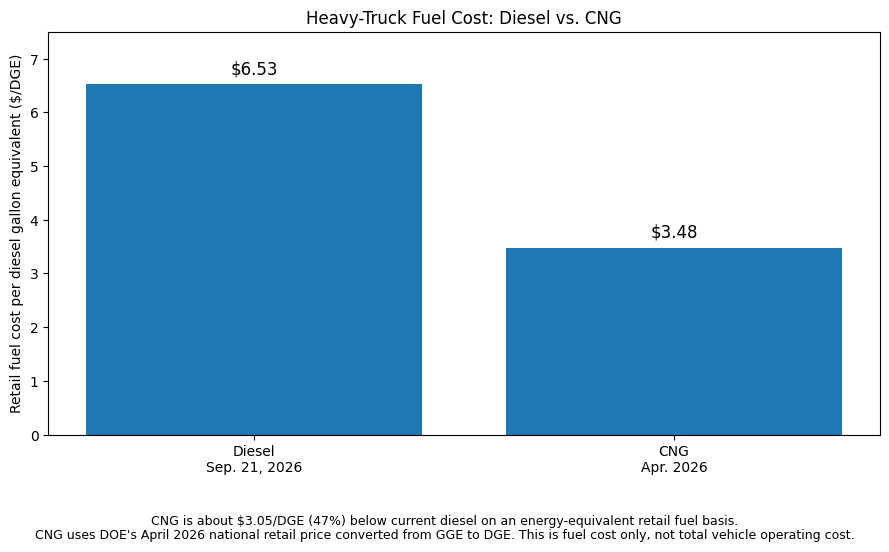
At the time, diesel around $5 per gallon looked expensive.
Right now?
$5 diesel looks cheap.
I argued then that concrete companies should start looking at natural gas for mixer fleets and other heavy equipment where it makes sense.
This latest diesel spike makes that conversation a lot more interesting.
When one energy source becomes expensive enough, markets start looking for alternatives.
That's what markets do.
And the United States happens to have a lot of natural gas. We're the world's largest LNG exporter.
Obviously, that doesn't mean every diesel excavator gets replaced with natural gas tomorrow.
Equipment availability matters. Fueling infrastructure matters. Range matters. Upfront cost matters.
The economics have to work.
But higher diesel prices change those economics.
At $3 diesel, converting part of a fleet might not be worth discussing.
At $5, you start running the numbers.
At $6 or $7?
The conversation changes.
What Are High Prices Trying to Tell Us?
High prices suck.
But they're also telling us something.
We're short something.
They tell refiners there's money to be made producing more diesel. They tell businesses to conserve fuel. They tell equipment manufacturers there's demand for alternatives.
And they tell companies using huge amounts of diesel that maybe it's time to start looking at other energy sources.
That's why I'm skeptical that simply blocking exports fixes this.
It might lower U.S. diesel prices initially.
But if Wright and the refiners are right, and restricting exports causes refineries to cut production, we've attacked a supply problem by creating an incentive to produce less supply.
That doesn't make much sense to me.
The longer-term answer is more energy, more refining capacity and more options.
And this is where I think natural gas becomes increasingly difficult to ignore.
We have enormous domestic supplies of it. We're producing enough that we're shipping huge quantities overseas as LNG.
Maybe we should be asking how much more of it we can use here.
Especially in industries like ours.
Six months ago, $5 diesel looked expensive enough to start asking that question.
Today, $5 diesel looks pretty good.
So instead of only asking whether Washington should keep more diesel in the United States, concrete companies might want to start asking a different question:
How much diesel do we really need to be using in the first place?

Editor-in-Chief, Concrete Logic
Seth Tandett is based in Richmond, Virginia, and has spent years working in the concrete construction industry across central and southern Virginia. His experience includes structural concrete work on multi-level frames, data centers, federal facilities, and other large-scale projects.
Today, Seth works in business development for Baker Construction and hosts the Concrete Logic Podcast, where he asks direct questions about what is really happening in the concrete industry.
Outside of work, Seth spends time studying economics, reading American history, and hunting waterfowl.
On the Concrete Logic Podcast, Seth brings the same approach he uses in the field: ask better questions, challenge weak answers, and focus on what actually matters in concrete.

Are Data Centers Really the Big Wave for Concrete?