What Happens to Concrete When One Market Starts Consuming Everything?
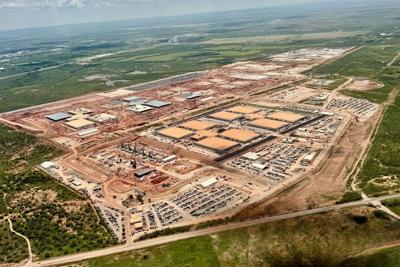
Just another small concrete job. | Wyomingnews.com
Data centers are consuming a lot of concrete.
That probably isn't news to anyone working in construction right now.
But here's the question I think is more interesting:
What happens to the concrete industry when one type of construction starts consuming an outsized share of the market?
The American Cement Association recently released its summer economic forecast. According to the ACA, data centers now account for roughly 55% of office construction spending, up from about 40% in 2025.
The ACA also expects data center expansion to consume somewhere between 625,000 and 725,000 metric tons of cement annually from 2026 through 2028.
That's a lot of cement.
And that doesn't include all the other concrete-intensive infrastructure that has to be built around these facilities.
Power generation.
Transmission.
Substations.
Roads.
Warehouses.
Manufacturing facilities.
All of it needs concrete.
For those of us in the concrete business, that sounds pretty good.
More concrete equals more business.
Right?
Maybe.
Is More Concrete Always Good for the Concrete Industry?
We tend to measure the health of our industry in yards.
How many yards did the plant ship?
How much backlog does the contractor have?
How many projects are bidding?
How many cubic yards are going into that data center?
Volume is easy to measure.
But does more volume automatically mean we're getting better?
That's a different question.
Imagine you're running a ready-mix operation in a market where several massive projects start simultaneously.
One project might need tens of thousands of yards.
Another one starts six months later.
Then another.
Suddenly your trucks are busy.
Your drivers are busy.
Your batch plants are busy.
Your suppliers are busy.
Your cement terminals are busy.
Your pumps are busy.
Your testing labs are busy.
Your concrete contractors are busy.
Everyone is busy.
And when everyone is busy, something interesting happens.
The conversation starts shifting from:
"Is this the best material for the job?"
to:
"Can you get it?"
That's not necessarily a criticism.
It's reality.
If you need thousands of tons of cement every week, availability matters.
But should availability become the primary qualification for the most important ingredient in concrete?
That's where I start getting uncomfortable.
What Cement Are We Actually Buying?
I've changed my thinking about Type IL cement over the past few years.
For a while, I thought we had a Type IL problem.
I'm not sure that's true anymore.
I think we may have a cement quality and consistency problem.
Those aren't the same thing.
Two cements can both meet the same ASTM designation and behave differently in concrete.
Different strength development.
Different water demand.
Different set characteristics.
Different interaction with admixtures.
Different finishing behavior.
Different performance under hot or cold conditions.
The specification may say both products are acceptable.
The concrete doesn't read the specification.
It reacts to the materials you actually put in the mixer.
So here's something worth asking:
When demand gets tight, do we become less selective about the cement we're using?
If your normal cement supply becomes constrained and another source becomes available, what happens?
Do you test it thoroughly?
Do you evaluate how it works with your aggregates and admixtures?
Do you run trial batches?
Or does the plant simply need cement because trucks have to leave the yard tomorrow morning?
Again, that's not an accusation.
It's the reality of operating a production business.
But maybe that's exactly why we need to talk about it.
The Concrete Plant Is a Manufacturing Facility
We sometimes forget how strange concrete is compared with almost every other building material.
Steel doesn't arrive at the project unfinished.
Neither does glass.
Neither does drywall.
Concrete does.
We're manufacturing the final product minutes before it gets placed.
Then we're transporting it down the highway while chemical reactions are already taking place.
Then we're pumping it.
Placing it.
Consolidating it.
Finishing it.
Curing it.
All while temperature, wind, humidity, haul time and field conditions influence the result.
That's a lot of variables.
And now we're adding another variable:
enormous demand.
If you're pouring 2,000 yards on Tuesday, another 2,000 on Thursday and doing it again next week, does the pressure to produce start outweighing the pressure to understand the materials?
Maybe it doesn't.
But it's worth asking.
Because a concrete plant isn't just a warehouse shipping a commodity.
It's a manufacturing operation.
What manufacturer would dramatically increase production without increasing quality control?
Yet in concrete, volume can increase quickly while the resources dedicated to understanding the material remain largely the same.
Same lab.
Same quality-control staff.
Same testing frequency.
Same people troubleshooting problems.
More yards.
More projects.
More risk.
Should quality control scale with production?
What About the Smaller Customer?
There's another side to this.
What happens to everyone who isn't building a billion-dollar data center?
Suppose you're building a school.
Or an apartment building.
Or a warehouse.
Or a parking deck.
Or replacing concrete pavement.
You're buying a few hundred yards at a time while a project twenty miles away is consuming thousands.
Who gets the trucks?
Who gets the preferred placement time?
Who gets the best drivers?
Who gets the attention when there's a problem?
I'm not saying producers intentionally neglect smaller customers.
That's not the point.
The question is what happens naturally when one customer becomes disproportionately important to your business.
Every business responds to its largest customers.
Concrete isn't any different.
But at what point does market concentration start influencing the way an entire local construction market operates?
That's something worth thinking about.
What Happens to Labor?
The material isn't the only thing being consumed.
People are too.
Experienced finishers.
Superintendents.
Pump operators.
Drivers.
Batch personnel.
Quality-control technicians.
Project managers.
Inspectors.
Testing technicians.
There are only so many experienced people in a local market.
You can buy another truck.
You can build another batch plant.
You can add another silo.
Finding someone with 20 years of concrete experience is harder.
So when a handful of megaprojects absorb those people, where does that leave the rest of the industry?
And maybe the bigger question is:
Are we using this boom to build the next generation of concrete professionals?
Or are we just moving the same experienced people from project to project?
Those are two very different things.
A construction boom can create enormous opportunity.
But if we don't use that opportunity to train people, the industry can come out the other side with the exact same labor problem it had before.
Only everyone is five years older.
There Is Another Risk We Don’t Talk About Enough
What happens when the boom slows down?
Right now, enormous amounts of capital are chasing data centers and the infrastructure required to support them.
That's serious money.
But projects aren't guaranteed simply because somebody wants to build them.
Community opposition is becoming a real development risk. Reuters recently reported that lenders are increasingly evaluating local opposition, permitting and community support when deciding whether data-center projects are financeable.
According to that report, at least 75 proposed projects worth roughly $130 billion faced local opposition during the first quarter of 2026.
So here's another question.
What happens if an industry expands capacity around projects that never get built?
More trucks.
More plants.
More people.
More equipment.
More debt.
That's great when the yards keep coming.
It becomes painful when they don't.
Anyone who has been around construction long enough knows that today's shortage can become tomorrow's excess capacity surprisingly quickly.
Which is why chasing volume alone can be dangerous.
Maybe We're Measuring the Wrong Thing
I'm not arguing against data centers.
Far from it.
Concrete should benefit enormously from this construction cycle.
We should take advantage of it.
But maybe we should also use it to ask harder questions about our own industry.
Are we producing more concrete or better concrete?
Are we investing in additional quality control as quickly as we're investing in production capacity?
Are we testing incoming cement for consistency, or simply verifying that it meets the specification?
Are we developing new concrete professionals, or burning out the ones we already have?
Are we building long-term businesses, or chasing the next million-yard market?
And perhaps most importantly:
If one market starts consuming everything, are we confident the rest of the concrete industry gets stronger because of it?
Because someday the data-center construction cycle will slow.
Every construction cycle eventually does.
When that happens, the yards poured won't be the most important thing left behind.
The people we trained will be.
The plants we improved will be.
The quality systems we developed will be.
And hopefully, so will a better understanding of the material we're putting in those plants.
The opportunity in front of concrete right now is enormous.
The question is whether we'll use all that demand simply to make more concrete.
Or whether we'll use it to make the concrete industry better.

Editor-in-Chief, Concrete Logic
Seth Tandett is based in Richmond, Virginia, and has spent years working in the concrete construction industry across central and southern Virginia. His experience includes structural concrete work on multi-level frames, data centers, federal facilities, and other large-scale projects.
Today, Seth works in business development for Baker Construction and hosts the Concrete Logic Podcast, where he asks direct questions about what is really happening in the concrete industry.
Outside of work, Seth spends time studying economics, reading American history, and hunting waterfowl.
On the Concrete Logic Podcast, Seth brings the same approach he uses in the field: ask better questions, challenge weak answers, and focus on what actually matters in concrete.
Would Banning Diesel Exports Actually Lower Diesel Prices?