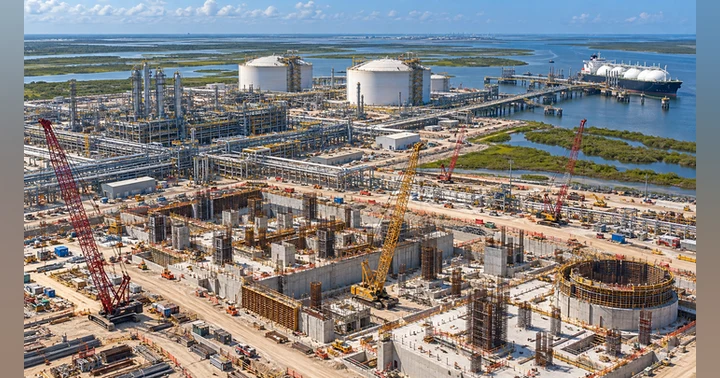
You’re a Concrete Contractor in 1925. Business Has Never Been Better.
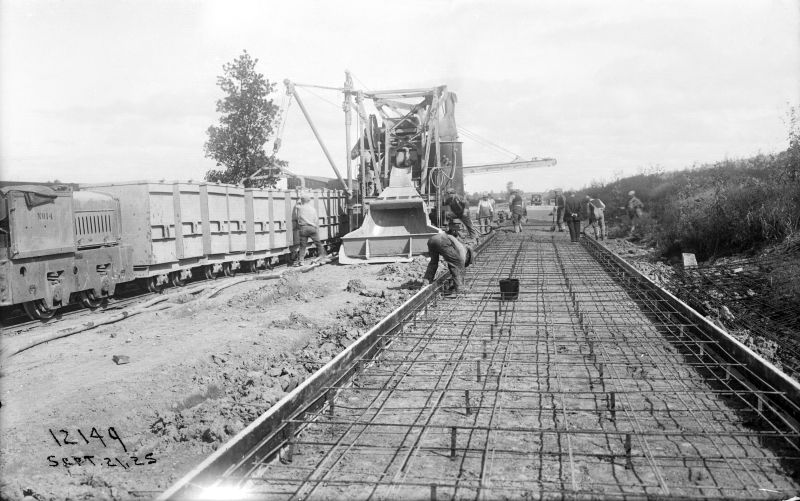
Nothing to worry about. The backlog is full. | Credit: Metropolitan Water Reclamation District of Greater Chicago
You’re a Concrete Contractor in 1925. Business Has Never Been Better.
It is 1925.
You own a concrete construction company in an American city.
And business is good.
Really good.
Your biggest problem is not finding work. It is figuring out how to get all the work done.
Everywhere you look, something is being built.
New houses are pushing farther outside the city. Apartment buildings are going up. Factories are expanding. Hotels, theaters, schools and office buildings are getting bigger.
And concrete is becoming an increasingly important part of how America builds all of it.
Your equipment would look primitive to a concrete contractor today.
There are no laser screeds. No concrete pumps. No power trowels.
Ready-mixed concrete delivered by fleets of trucks is not yet how most of the industry operates.
You are probably mixing concrete on or near the jobsite.
A new Jaeger trailer-mounted concrete mixer can be bought for less than $200. Bigger models cost several hundred dollars. Cement arrives in 94-pound bags.
On a large project, you might have a dedicated mixing plant.
In Chicago this year, contractors working on what will become Wacker Drive are using three concrete mixing plants to place roughly 120,000 cubic yards of concrete. Each mixing outfit requires a 19-man crew. Eleven of those men do little more than handle cement, moving it from storage, loading conveyors and emptying those 94-pound bags into the charging hopper.
Once mixed, concrete can still be distributed around the project using hand carts running on temporary runways.
This is concrete construction in 1925.
Labor intensive.
Equipment intensive.
Slow by today's standards.
And booming.
America Is Changing Around You
One of the biggest reasons is parked right outside your jobsite.
The automobile.
At the beginning of the decade, there were about 8.2 million passenger cars registered in the United States.
By 1925, there are roughly 17.5 million.
The number has more than doubled in five years.
And those cars need somewhere to go.
The federal government and the states are pouring money into highways. The Federal-Aid Highway Act of 1921 created a system in which federal and state governments share the cost of improving important roads.
Thousands of miles are being surfaced.
Road networks are expanding.
Bridges are needed.
Garages are needed.
Factories are needed.
Gas stations are needed.
New neighborhoods become possible because workers no longer have to live within walking distance of a factory or streetcar line.
If you are a concrete contractor, the automobile isn't just changing transportation.
It is creating work.
A lot of it.
And you have no way of knowing how far this will go.
Then There Is Electricity
Cars aren't the only thing changing America.
Electricity is spreading rapidly.
At the beginning of the century, fewer than 8% of American homes had electric service.
By the end of this decade, that number will approach 68%.
Factories are replacing centralized steam power with electric motors.
Businesses are installing electric lighting.
Homes are beginning to fill with appliances.
Entire industries are being built around electricity.
General Electric.
Westinghouse.
Utilities.
Equipment manufacturers.
Power generation.
Transmission.
All of it requires capital.
All of it requires construction.
There is a sense that America has entered a different age.
And maybe it has.
Productivity is increasing.
Manufacturing is becoming more efficient.
Mass production is lowering the cost of things ordinary Americans could never afford before.
People have radios in their homes.
They have automobiles in their driveways.
Some have electric refrigerators.
The country feels faster.
More connected.
More productive.
Richer.
If you're in construction, it is hard not to believe this can continue for a very long time.
Your Backlog Says They're Right
You aren't an economist.
You don't spend your day studying monetary policy or worrying about what the Federal Reserve is doing.
You pour concrete.
And from where you're standing, the economy looks pretty damn good.
In 1925, building activity in America's cities reaches extraordinary levels.
Federal building-permit data will eventually show expenditures on new buildings in 257 cities reaching approximately $3.8 billion this year.
That will turn out to be the peak.
But you don't know that.
All you see are plans.
Another apartment building.
Another subdivision.
Another hotel.
Another office building.
Another factory.
Another road.
Another project that needs foundations, walls, floors, sidewalks or pavement.
Banks are willing to finance them.
Investors are willing to fund them.
Developers are willing to build them.
So you keep pouring.
Everybody Wants a Piece of It
Something else has changed.
There is a lot of money around.
And ordinary Americans are becoming increasingly interested in investing it.
Stocks are no longer something discussed only by wealthy bankers in New York.
Your supplier talks about stocks.
The guy who sells you trucks talks about stocks.
Maybe some of your employees do too.
And why wouldn't they?
The market keeps going up.
The Dow Jones Industrial Average fell to around 63 during the ugly recession of 1921.
At the beginning of 1925, it is around 121.
By December, it will be around 155.
In other words, while you've been watching your concrete backlog fill up, the stock market has more than doubled from its 1921 low.
And people are noticing.
But the really big run hasn't even happened yet.
People are also discovering they don't necessarily need all the money required to buy a stock.
They can borrow it.
Buying stocks "on margin" allows an investor to put down a fraction of the purchase price and borrow the rest.
Sometimes the investor puts down only about 10%.
If the stock goes up, the return on the investor's actual cash can be enormous.
And stocks keep going up.
It seems foolish not to participate.
Buildings Have Their Own Version of It
You see something similar happening in your business.
Developers don't necessarily need piles of cash sitting in a bank to construct a building.
Wall Street has discovered ways to connect ordinary investors with real estate development.
Real estate bonds are becoming enormously popular.
Investors buy the bonds.
Developers get the money.
Buildings go up.
By 1925, real estate bonds account for nearly 23% of all corporate debt issued in America.
Think about that.
Almost one out of every four dollars being raised through corporate debt issuance is tied to real estate.
That money helps finance apartment buildings, hotels and the new skyscrapers transforming American cities.
And you're standing at the bottom of those buildings pouring the foundations.
It feels like progress.
Because much of it is.
America genuinely needs more housing.
Cities genuinely are growing.
Businesses genuinely are expanding.
Automobiles genuinely are changing transportation.
Electricity genuinely is transforming industry.
These aren't imaginary technologies.
This isn't some fake economy built around something nobody needs.
America really is changing.
That's what makes what happens next so difficult to see.
It's 1926 Now
Something feels a little different.
Nothing dramatic.
You're still working.
There are still projects going up.
The newspapers aren't predicting the end of the world.
The stock market certainly isn't collapsing.
But maybe that project you expected to start gets delayed.
A developer decides to wait.
Another apartment building doesn't move forward.
A subdivision doesn't sell quite as quickly.
Maybe you're bidding harder for work than you were a year ago.
Maybe another contractor is suddenly willing to take a job at a number that doesn't make much sense to you.
Maybe you start hearing about vacancies in buildings that were recently completed.
You don't think much about it.
Construction has always had cycles.
Besides, look at everything happening around you.
America is booming.
1927
The stock market keeps climbing.
Technology keeps improving.
Businesses keep expanding.
People keep buying automobiles.
The radio industry is exploding.
Electricity continues spreading across the country.
Wall Street is doing better than ever.
But construction doesn't quite feel like 1925 anymore.
That's not your imagination.
The building boom has already peaked.
Real estate peaked before Wall Street.
Residential construction is weakening.
Some of the buildings financed during the boom aren't producing the returns investors expected.
There are too many apartments in certain markets.
Too much office space in others.
Projects that made perfect sense when rents and property values were rising look different when they stop rising.
The concrete contractor is beginning to see something the stock investor isn't.
1928
Now Washington is getting nervous.
The Federal Reserve is worried about speculation.
Too much money is flowing into stocks.
Too many people are borrowing money to buy them.
The Fed begins tightening credit.
It sells government securities.
Discount rates rise.
Money becomes more expensive.
If you're a stock speculator, that's a problem.
If you're a developer trying to finance another building, that's a problem too.
And the construction numbers are becoming difficult to ignore.
By 1928, expenditures on new buildings in those same 257 American cities are 21.3% below their 1925 peak.
Residential construction is down 24.5%.
Construction has been declining for three years.
But here's the strange part.
The stock market is still roaring.
In fact, this is when the stock boom really accelerates.
People are getting rich.
New fortunes are being created.
The Dow climbs roughly 39% during 1928 alone.
If you tell someone that construction doesn't feel quite right, they might tell you that you're looking at the wrong thing.
Look at the market.
Look at technology.
Look at productivity.
Look at America.
The future has never looked brighter.
1929
You start the year watching the same strange split.
Construction has been telling you for several years that something has changed.
Wall Street is telling everyone else the opposite.
Stocks keep climbing.
Money keeps chasing them.
People who stayed out of the market look foolish.
People who warned about speculation look even more foolish.
In September, the Dow reaches roughly 381.
Eight years earlier, it was around 63.
The market has increased about sixfold.
Imagine watching that happen while people keep telling you that stocks are too expensive.
Eventually you stop listening.
Maybe the old rules really don't apply anymore.
After all, look at what is happening.
The automobile really is changing America.
Electricity really is changing America.
Radio really is changing America.
Mass production really is increasing productivity.
New factories really are producing goods at prices ordinary Americans can afford.
The roads, power systems, factories and buildings constructed during the decade really will serve the country for years.
The technology is real.
The productivity gains are real.
The infrastructure is real.
The mistake isn't believing any of that.
The mistake is believing that because the technology is real, the price you pay for everything connected to it doesn't matter.
Then October arrives.
The market breaks.
On October 28, the Dow falls nearly 13% in a single day.
The following day it falls another 12%.
The Roaring Twenties are over.
But Your Industry Had Already Been Warning You
This may be the most interesting part of the entire story.
If you're that concrete contractor, the warning didn't arrive on Wall Street in October 1929.
You had been watching it develop on jobsites for years.
Construction peaked in 1925.
Residential building started falling.
Real estate weakened.
Vacancies appeared.
Financing became more difficult.
The securities being used to finance commercial real estate began deteriorating before the stock market crashed.
By 1928, new building expenditures in those 257 cities were already more than 20% below their peak.
Yet the Dow wouldn't reach its high until September 1929.
For nearly four years, the people building America were seeing something different from the people buying pieces of American companies.
The guy pouring concrete didn't need to understand monetary policy.
He didn't need to predict the stock market.
He didn't need to know what was going to happen in October 1929.
He only needed to look at his backlog.
His bid list.
His competitors.
The developers.
The financing.
And which projects were actually getting built.
Now Come Back to 2026
A century later, America is once again being reshaped by a technology that its biggest supporters believe will change nearly everything.
Artificial intelligence.
The technology is real.
The computing power required to support it is real.
The electricity demand is real.
And the amount of construction required to build the infrastructure behind it is enormous.
Data centers are being announced across the country.
Utilities are planning new generation.
Transmission systems need to expand.
Manufacturers are building plants to produce generators, transformers, switchgear, cooling equipment and other infrastructure.
And concrete contractors in some markets are looking at enormous opportunities.
That doesn't mean 2026 is 1929.
History doesn't work that neatly.
There are enormous differences between the two periods.
And artificial intelligence may prove to be every bit as transformational as its biggest advocates believe.
But that's actually what makes the 1920s worth studying.
The automobile wasn't a fad.
Electricity wasn't a fad.
Radio wasn't a fad.
Mass production wasn't a fad.
America really was entering a new technological era.
The people who believed those technologies would change the world were right.
And people still managed to overbuild.
They still borrowed too much.
They still speculated.
They still paid prices that only made sense if extraordinary growth continued.
And eventually the financial world discovered something every concrete contractor already understands.
You can build something incredibly useful and still pay too much to build it.
A revolutionary technology does not eliminate the business cycle.
It doesn't make debt disappear.
It doesn't guarantee every project built to serve that technology will make money.
And it doesn't mean every company attached to the boom deserves whatever price investors are willing to pay for it.
Which leaves those of us in construction with an interesting question.
If you were that concrete contractor standing on a jobsite in 1925, looking at your backlog and wondering how long the good times could possibly last, you wouldn't have known what was coming.
But by 1927 or 1928, you might have noticed that something had changed.
Not because somebody on Wall Street told you.
Because the work told you.
So maybe the question isn't whether 2026 looks like 1929.
Maybe that's the wrong question.
The better question is:
What is the construction industry telling us right now?
And are we paying attention?

Editor-in-Chief, Concrete Logic
Seth Tandett is based in Richmond, Virginia, and has spent years working in the concrete construction industry across central and southern Virginia. His experience includes structural concrete work on multi-level frames, data centers, federal facilities, and other large-scale projects.
Today, Seth works in business development for Baker Construction and hosts the Concrete Logic Podcast, where he asks direct questions about what is really happening in the concrete industry.
Outside of work, Seth spends time studying economics, reading American history, and hunting waterfowl.
On the Concrete Logic Podcast, Seth brings the same approach he uses in the field: ask better questions, challenge weak answers, and focus on what actually matters in concrete.
Are We Reducing Concrete's Carbon Footprint or Just Moving It Somewhere Else?