The Concrete Passed Every Test. Why Did It Still Fail?
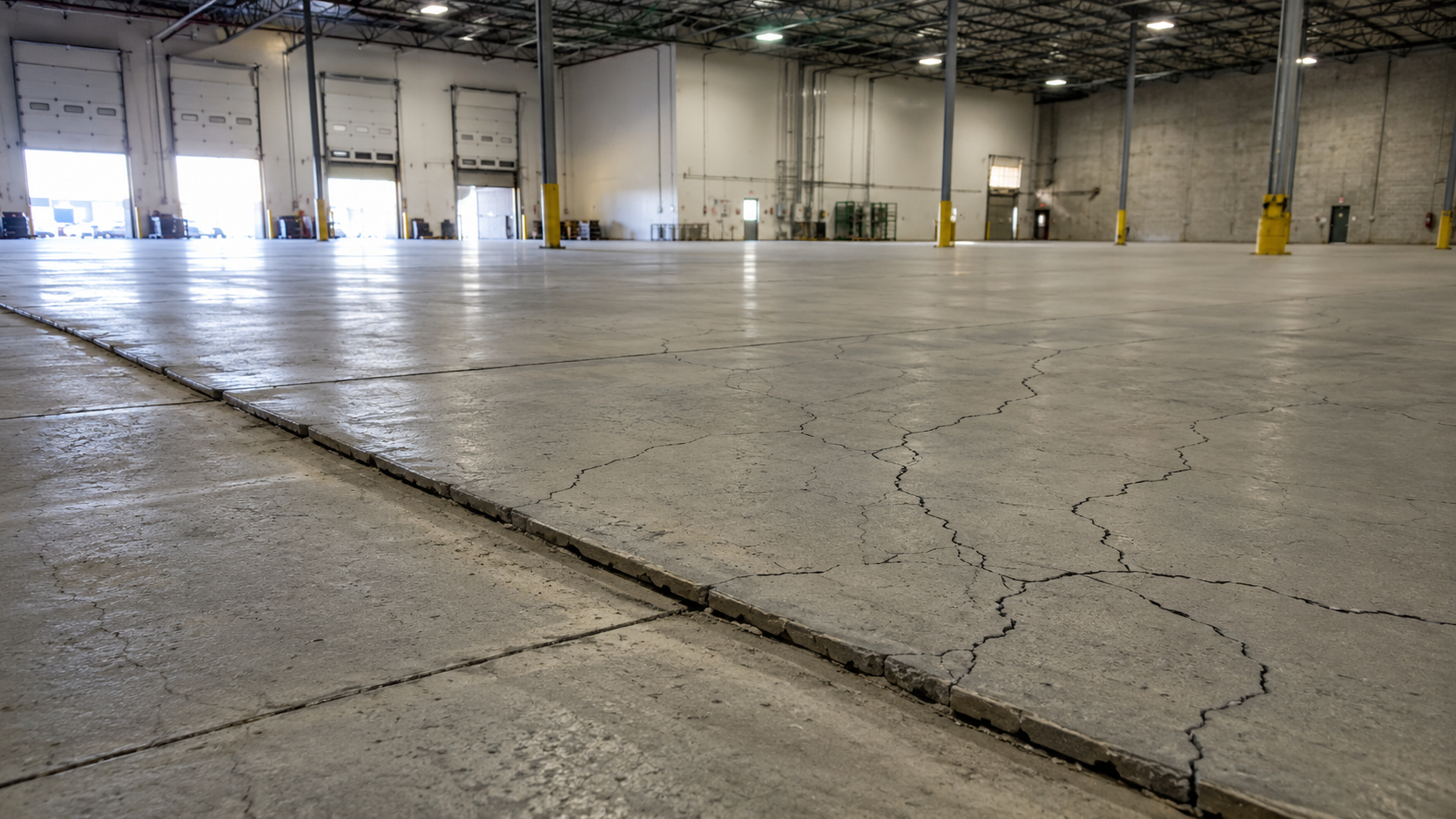
All the testing said it was good concrete...
It is 2 a.m.
You have 40,000 square feet of slab to place today.
The pump is set up.
The finishers are there.
Trucks are starting to roll.
The superintendent wants the slab down before the heat gets ugly.
So far, so good.
Then the first truck arrives.
The testing technician checks the concrete.
Slump is good.
Air is good.
Temperature is acceptable.
Cylinders are made.
The truck backs up to the pump and the placement begins.
Another truck arrives.
Same thing.
Pass.
Another truck.
Pass.
The placement is moving along exactly the way everyone hoped.
At least on paper.
A few hours later, things start to change.
The temperature is climbing faster than expected.
The wind picks up.
The surface starts tightening.
The finishing crew is falling behind.
Someone asks for a little more slump.
Another truck gets held up in traffic.
The pump stops for fifteen minutes.
Then it starts again.
The superintendent looks at the weather forecast.
The foreman looks at the slab.
The producer looks at the truck queue.
Everybody starts making decisions.
Keep pouring?
Slow down?
Add another finisher?
Adjust the mix?
Add water?
Use an evaporation reducer?
Start curing sooner?
Nobody thinks they are making the decision that is going to ruin the slab.
They are trying to keep the placement moving.
And they do.
The slab gets placed.
The finish looks good.
The cylinders eventually break above 5,000 psi.
Specified strength was 4,000.
Everyone moves on.
Until a few months later.
Cracks start showing up.
Some edges curl.
There are areas where the surface does not look quite right.
Now the emails start.
Photos get passed around.
The engineer gets involved.
The contractor gets involved.
The ready-mix producer gets involved.
Someone pulls out the testing reports.
Air passed.
Slump passed.
Temperature passed.
Strength passed.
Then somebody says it.
The concrete passed every test.
So how did the slab fail?
That is where things get interesting.
The Test Only Saw Part of the Story
Go back to that first truck.
The technician sampled the concrete.
Slump looked good.
Air looked good.
Temperature looked good.
Cylinders were made.
Those are useful tests.
We need them.
But think about everything that happened after the testing technician finished.
The concrete went through a pump.
It was placed over an actual subgrade.
The weather changed.
Wind moved across the surface.
Finishers worked the concrete.
The placement speed changed.
Trucks arrived at different intervals.
The concrete continued hydrating while everyone tried to keep things moving.
Eventually the slab was sawcut.
It was cured.
Then it spent the next several months dealing with restraint, temperature changes, loading and whatever else the building threw at it.
The cylinder experienced almost none of that.
Yet months later, when the slab develops a problem, one of the first things everyone wants to see is the cylinder report.
Why?
Because it gives us a number.
And numbers feel definitive.
5,200 psi.
Case closed.
Except maybe it is not.
What Did 5,200 PSI Actually Prove?
The cylinders exceeded the specified strength.
That tells us something important.
The concrete in those specimens achieved the required compressive strength at that age.
It does not tell us that the slab could not crack.
It does not tell us what the evaporation rate was during the placement.
It does not tell us whether the surface dried faster than bleed water could replace the moisture being lost.
It does not tell us when finishing started.
It does not tell us how aggressively the slab was finished.
It does not tell us when curing started.
It does not tell us whether sawcuts were made at the right time.
It does not tell us how restrained the slab was.
And it definitely does not tell us whether everyone made the right decisions during those hours when the concrete was becoming the finished structure.
Strength matters.
But somewhere along the way, I think we started using compressive strength as shorthand for something much bigger.
Good concrete.
The cylinders broke high.
Therefore the concrete was good.
Maybe.
But good at what?
The Concrete Was Still Being Made After It Left the Plant
This is the part of concrete construction that I think we sometimes forget.
A steel beam shows up on the project pretty much being what it is going to be.
Concrete does not.
Concrete shows up unfinished.
We are basically manufacturing the final material while we are building the structure.
Think about that.
The ready-mix producer can batch a great mixture.
Then the truck gets delayed.
The concrete can arrive in perfect condition.
Then someone adds water.
The water-cementitious ratio can be right where it needs to be.
Then the surface gets hammered by wind.
The placement can go perfectly.
Then curing gets delayed.
Everything can go right during placement.
Then the joints get cut too late.
Whose concrete problem is that?
That question gets uncomfortable pretty quickly.
Because everyone owns a piece of the process.
The producer.
The contractor.
The testing agency.
The engineer.
The owner.
And Mother Nature usually gets a vote whether we invite her or not.
Passing the Specification Is Not the Same as Guaranteeing Performance
We need specifications.
We need slump limits.
We need air requirements.
We need water-cementitious material limits.
We need temperature limits.
We need strength testing.
Without measurable acceptance criteria, concrete construction would be chaos.
But maybe we expect too much from those numbers.
They tell us whether certain requirements were satisfied.
They do not tell us the entire story of the placement.
That distinction matters.
Acceptance testing tells us whether the concrete passed the test.
Performance tells us whether the concrete did its job.
Those two things usually align.
But not always.
And when they do not, the investigation probably needs to get bigger than the testing report.
Replay the Placement
Imagine investigating our slab six months later.
Instead of asking only:
What did the cylinders break at?
Replay the day.
What time did batching start?
How long were the truck cycles?
Were trucks stacking up?
Was there a gap in the placement?
Was water added?
What was the concrete temperature?
What was the air temperature?
What was the wind doing?
How quickly was moisture leaving the surface?
Was the subgrade damp?
When did finishing start?
When did curing start?
When were the joints cut?
Where did the cracks occur relative to columns, corners, penetrations and other restraints?
Now the investigation starts looking different.
You are no longer searching for one bad number.
You are reconstructing a series of decisions.
And that may be a better way to think about concrete construction in the first place.
Concrete Is a Trail of Decisions
A concrete placement is not one decision.
It is hundreds of little ones.
Some are made weeks before the pour.
Some are made at the batch plant.
Some are made standing behind the pump.
Some are technical.
Some are logistical.
Some are economic.
And plenty of them are made because someone is standing there saying:
We have eight trucks on the road. What do you want to do?
Most of those decisions seem perfectly reasonable when you make them.
The problem is that one decision changes the next decision.
A truck is late.
Now the pump sits.
The pump sits.
Now the finishing crew catches the placement.
The crew catches the placement.
Now another six trucks arrive at once.
You speed things back up.
Now the finishers are behind again.
Meanwhile the temperature went up ten degrees and the wind started blowing.
Nothing catastrophic happened.
It was just a trail of small decisions.
And the slab remembers every one of them.
The testing report does not.
That idea is actually what got us messing around with something new at the Concrete Logic Academy.
We built a prototype game called Concrete Trail.
It puts you in charge of a concrete project and starts throwing these kinds of decisions at you.
Weather changes.
Trucks get delayed.
The schedule gets squeezed.
Costs start moving.
You make a decision and live with what happens next.
It is definitely not a finished game yet.
That is why we want people in the industry to beat on the prototype a little bit.
Try the Concrete Trail prototype here.

Play through it and see how you do.
Tell us how you did: Concrete Trail Feedback
Bragging is encouraged.
So is telling us where the game gets it wrong.
Because much like an actual concrete project, I have a feeling everyone is going to be convinced they made the right decisions.
Right up until they see the final score.
And the next time a concrete problem shows up and somebody pulls out the cylinder breaks and says:
“The concrete passed.”
Maybe the better question is:
Okay. What happened after the test?
Because that is probably where the real story starts.

Editor-in-Chief, Concrete Logic
Seth Tandett is based in Richmond, Virginia, and has spent years working in the concrete construction industry across central and southern Virginia. His experience includes structural concrete work on multi-level frames, data centers, federal facilities, and other large-scale projects.
Today, Seth works in business development for Baker Construction and hosts the Concrete Logic Podcast, where he asks direct questions about what is really happening in the concrete industry.
Outside of work, Seth spends time studying economics, reading American history, and hunting waterfowl.
On the Concrete Logic Podcast, Seth brings the same approach he uses in the field: ask better questions, challenge weak answers, and focus on what actually matters in concrete.
Why Are We Asking Concrete Crews to Fix a Productivity Problem They Didn’t Create?