We Can Drill 5.5 Miles Sideways, but Getting a Permit Is the Hard Part?
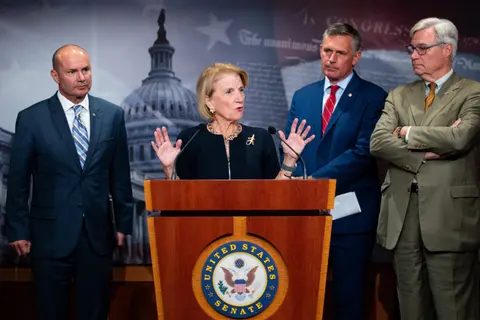
The solution to too many laws? You guessed it. Another law. | Photo: Bill Clark/CQ Roll Call
I've got a theory. We've gotten pretty good at figuring out how to build things in this country. It's figuring out how to get permission to build them that seems to be the problem.
And I came across two stories this week that illustrate that point rather well. One involves an incredible engineering achievement in West Virginia. The other involves Congress trying to make it a little easier to build energy infrastructure.
I'll let you guess which one I found more impressive.
EQT Corporation recently drilled a natural gas well in West Virginia with a horizontal section stretching 29,070 feet. That's 5.5 miles sideways, underground!
The well, called Longwell 9H, reached a total measured depth of 37,610 feet. According to EQT's announcement, it's the longest horizontal well drilled on land in the continental United States.
Think about that for a minute. They drilled down into the earth, turned the drill horizontally, and continued for another five and a half miles while staying within a targeted geological formation.
I don't know about you, but I find that absolutely incredible.
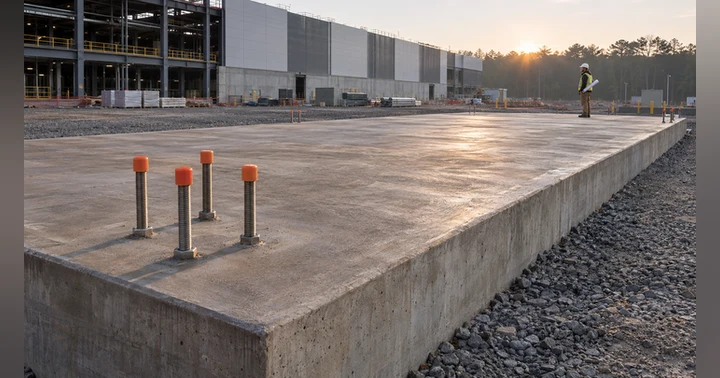
Meanwhile, back on the construction site, we're still trying to figure out who was supposed to provide the anchor bolt layout.
But here's what makes this even more interesting. We're getting remarkably good at pulling natural gas out of the ground. Getting it to where it's needed? Well, that's another story.
And that brings me to some news out of Washington.
On Thursday, November 19, the Senate passed the Bipartisan American Affordability and Jobs Act (BAAJA) by a vote of 62-33. The legislation now heads to the House.
The bill would overhaul portions of the federal permitting process, potentially making it easier and faster to build pipelines, power plants, transmission lines, and other major infrastructure.
Imagine that. Washington considering legislation that might actually make it easier to build something.
Of course, there are environmental considerations and concerns about limiting public input. Those deserve attention. But I think most people can agree that spending years trying to figure out whether you're allowed to build something isn't exactly a great way to attract investment.
And here's why I think this legislation is worth paying attention to.
I recently read an article by Doomberg titled The Internet of Gas. The article describes how America's natural gas pipeline network is becoming increasingly interconnected, almost like the internet itself.
One example is a little village called Clarington, Ohio. Population? Roughly 280 people.
Not exactly a booming metropolis.
Yet Clarington is becoming an important hub connecting Appalachian natural gas production with pipelines supplying markets across the country.
EQT already has pipeline connections serving the area and is planning its POWER Pipeline, which would add roughly 1 billion cubic feet per day of transportation capacity by 2030.
Antero Midstream is also considering a new pipeline connecting its West Virginia operations to Clarington. During a recent earnings call, CEO Michael Kennedy said the company was "scoping it right now," with a potential investment decision in 2027.
Apparently, Clarington is becoming the place to be. Who needs beachfront property when you've got pipeline interconnections?
But this isn't just happening in Ohio.
According to S&P Global Energy, companies have announced 46.5 billion cubic feet per day of proposed natural gas pipeline capacity in 2026 alone. Roughly 20 billion of that originates in Texas.
That's proposed capacity, not additional gas production, and certainly not a guarantee that every pipeline gets built.
Still, that's an awful lot of pipe somebody wants to put in the ground.
If you've followed my articles over the past couple of years, you know I've been keeping a close eye on natural gas.
In February 2025, I wrote Natural Gas and Data Centers: A Growing Trend We Saw Coming. At the time, data center developers were increasingly considering their own natural gas generation rather than waiting years for utility connections.
Then in October, I wrote about how America became the world's largest LNG exporter.
And just last week, I published America Has Plenty of Natural Gas. So What's Holding Up the Power?, looking at turbine shortages and the infrastructure needed to turn all that gas into electricity.
I'm beginning to think I should have started a natural gas podcast.
But seriously, all these developments are connected.
America has enormous natural gas reserves. We've developed incredible technology to extract them. We're building LNG terminals to ship gas overseas, while data centers and manufacturers here at home are demanding more electricity.
The challenge is connecting all these pieces.
And that's where the permitting bill could make a significant difference.
If developers can get more predictable answers about pipeline routes, transmission projects, and power generation facilities, projects that have been sitting on the sidelines might finally move forward.
For contractors, that could mean new compressor stations, power plants, LNG facilities, substations, and expansions of existing industrial sites.
I'm particularly interested in the smaller projects that don't make national headlines. Upgrades to an existing pipeline corridor or expansion of a compressor station might not sound exciting, but those projects add up.
Of course, a permit doesn't mean construction starts tomorrow. Somebody still has to finance the project, buy the equipment, finish the engineering, and hire the contractors.
And as we've recently discussed, turbines, transformers, and structural steel aren't exactly sitting around waiting for somebody to order them.
There's another side to this worth considering, too.
Doomberg argues that as America's pipeline network becomes more interconnected, regional natural gas price differences could shrink. Gas that's relatively cheap in Appalachia would have better access to markets willing to pay more.
That could be great for producers and industrial development. Whether it translates into lower prices for consumers everywhere is another question.
Pipelines aren't free, and neither is building all this new infrastructure. Somebody eventually pays.
I also wonder how much of this new energy capacity could ultimately benefit the public if data center demand doesn't materialize quite as aggressively as everyone expects.
I've said before that I'd love to see a future where some of this infrastructure we're building for data centers eventually supplies electricity to the broader grid.
Maybe that's wishful thinking. But wouldn't that be something?
For now, I'm going to keep watching what happens in the House, along with the pipeline projects and power generation investments that could follow.
And I'll leave you with this thought.
We've figured out how to drill a hole five and a half miles sideways through the earth with remarkable precision. Surely we can figure out how to build the infrastructure needed to put that natural gas to work.

Editor-in-Chief, Concrete Logic
Seth Tandett is based in Richmond, Virginia, and has spent years working in the concrete construction industry across central and southern Virginia. His experience includes structural concrete work on multi-level frames, data centers, federal facilities, and other large-scale projects.
Today, Seth works in business development for Baker Construction and hosts the Concrete Logic Podcast, where he asks direct questions about what is really happening in the concrete industry.
Outside of work, Seth spends time studying economics, reading American history, and hunting waterfowl.
On the Concrete Logic Podcast, Seth brings the same approach he uses in the field: ask better questions, challenge weak answers, and focus on what actually matters in concrete.
Could One Steel Mill Slow America's Next Construction Boom?