2008 Called. It Wants Its Headlines Back.
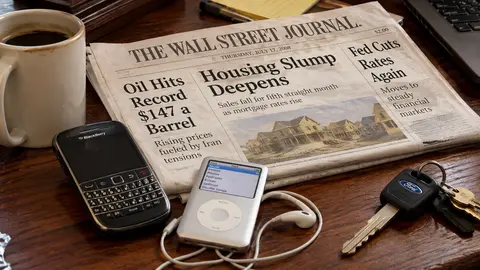
Same economic problems. Fewer buttons on our phones. | AI
I've been doing something a little strange lately. I've been listening to podcast episodes recorded in 2008.
Not podcasts ABOUT 2008. Podcasts recorded in 2008.
The podcast is No Agenda, hosted by Adam Curry and John C. Dvorak. What's fascinating about listening to these guys is that they have no idea what's coming. We do.
They're talking about trouble with Iran, skyrocketing oil prices, China stockpiling oil, a struggling housing market, rising mortgage rates and the government meddling in financial markets.
Sound familiar?
What struck me was how many of the issues they were discussing in 2008 are making headlines again in 2026. So, I started researching some of these topics to see just how similar the two periods are.
In the summer of 2008, oil reached nearly $147 a barrel. There was speculation that Israel would attack Iran over its nuclear program and concerns about what that would do to the world's oil supply, particularly through the Strait of Hormuz.
Fast-forward 18 years, and those concerns have become a reality. The war involving the U.S., Israel and Iran has disrupted global oil supplies and driven up the cost of just about everything that requires diesel to produce or transport.
For those of us in construction, that's just about everything.
Another topic that came up in those old podcast episodes was China stockpiling oil. China was in the early stages of developing its strategic petroleum reserves in 2008.
Apparently, they haven't lost interest in that strategy.
According to a November 2026 Reuters analysis, China resumed building its crude oil inventories in October at an estimated rate of 490,000 barrels per day. Despite the disruptions in the Middle East this year, China's crude inventories were estimated to be at least as large as they were at the beginning of the year.
While much of the world has been scrambling to secure energy supplies, China had already put a considerable amount of oil in the bank.
Then there's the housing market.
According to Freddie Mac's historical mortgage data, the average 30-year mortgage rate went from approximately 5.5% in January 2008 to 6.6% in July. This was happening while the Federal Reserve was CUTTING interest rates.
Wait a minute. Isn't cutting interest rates supposed to make borrowing money cheaper?
Apparently, someone forgot to tell the mortgage market.
Inflation, long-term Treasury yields and the increasing risk associated with mortgage lending were working against the Fed's efforts.
Here we are in November 2026, with mortgage rates above 7%. Existing-home sales have fallen to their lowest level in more than 16 years.
Even more concerning is that pending home sales in October hit their lowest level since the National Association of Realtors began tracking them in 2001.
There is a significant difference between the two housing markets, though. In 2008, a lot of people couldn't afford to KEEP their homes. Today, a lot of people can't afford to BUY them.
Different problems, but neither is particularly good for those of us who make a living building things.
And then there's the government's involvement in financial markets.
In March 2008, the Federal Reserve helped facilitate JPMorgan Chase's acquisition of Bear Stearns, financing approximately $29 billion in assets.
By September, the government had taken control of Fannie Mae and Freddie Mac, the SEC temporarily banned short selling in hundreds of financial stocks, and the Federal Reserve stepped in to rescue AIG.
Eventually, Congress authorized the $700 billion Troubled Asset Relief Program, better known as TARP.
So much for letting the market sort things out.
The government's argument was that allowing certain financial institutions to fail would jeopardize the entire financial system.
Today, we're seeing the federal government take ownership stakes in private companies, particularly those involved in semiconductors and critical minerals. The justification this time is national security and economic competitiveness.
The circumstances are different, but it raises a similar question: How accurately are the financial markets telling us which businesses and investments are economically viable when the government is also a participant?
And that brings me to the elephant in the room in the construction industry today: artificial intelligence.
Think about where we were in the years leading up to 2008. Housing was booming. People were making money building homes, selling homes, financing homes and selling financial products backed by those homes.
An entire ecosystem of businesses benefited from the assumption that the housing market would continue to grow.
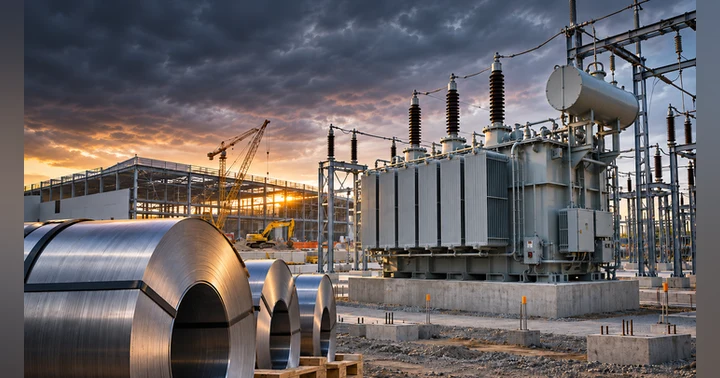
Today, look at the ecosystem of businesses benefiting from AI. We're building data centers, power plants, semiconductor facilities, substations, transmission lines and natural gas pipelines at an incredible scale.
And from the perspective of a concrete contractor, it's been quite the ride.
But how much of the overall construction market is being propped up by this one industry?
According to the latest available U.S. construction spending figures, overall spending in September was down 2.7% from a year earlier. Residential construction spending fell 5.5% in September alone, while private nonresidential construction spending increased 1.1%.
Depending on what type of construction you're involved in, you might have a vastly different opinion of how well the economy is doing right now.
That's one of the reasons I wanted to have Ken Simonson, chief economist for the Associated General Contractors of America, on this week's episode of the Concrete Logic Podcast, The 2027 Construction Outlook: Who Wins and Who Loses?
Are we in the middle of a construction boom, or are we in the middle of a boom in one particular type of construction?
There's a big difference.
I'm not suggesting AI is a fraud or that data centers are going to become the next subprime mortgages. AI can be a revolutionary technology and still attract more investment than the market can economically justify.
Remember, the internet turned out to be pretty useful despite what happened to investors during the dot-com bubble.
I'm also not suggesting we're headed for another Great Recession. There are plenty of differences between 2008 and 2026.
What I find interesting about listening to those old No Agenda episodes is that many of the economic problems that preceded the financial collapse were already being discussed months before Lehman Brothers went under.
Nobody knew exactly how it was all going to play out.
Eighteen years later, we're dealing with many of the same issues while pouring an unprecedented amount of money into a relatively new industry.
For those of us in construction, it might be a good time to evaluate how diversified our businesses really are.
Because I'd hate to be listening to episodes of the Concrete Logic Podcast in 2044 and realize we were discussing the warning signs the whole time.

Editor-in-Chief, Concrete Logic
Seth Tandett is based in Richmond, Virginia, and has spent years working in the concrete construction industry across central and southern Virginia. His experience includes structural concrete work on multi-level frames, data centers, federal facilities, and other large-scale projects.
Today, Seth works in business development for Baker Construction and hosts the Concrete Logic Podcast, where he asks direct questions about what is really happening in the concrete industry.
Outside of work, Seth spends time studying economics, reading American history, and hunting waterfowl.
On the Concrete Logic Podcast, Seth brings the same approach he uses in the field: ask better questions, challenge weak answers, and focus on what actually matters in concrete.

We Can Drill 5.5 Miles Sideways, but Getting a Permit Is the Hard Part?