Why Are We Putting Air in Concrete That Will Never Freeze?
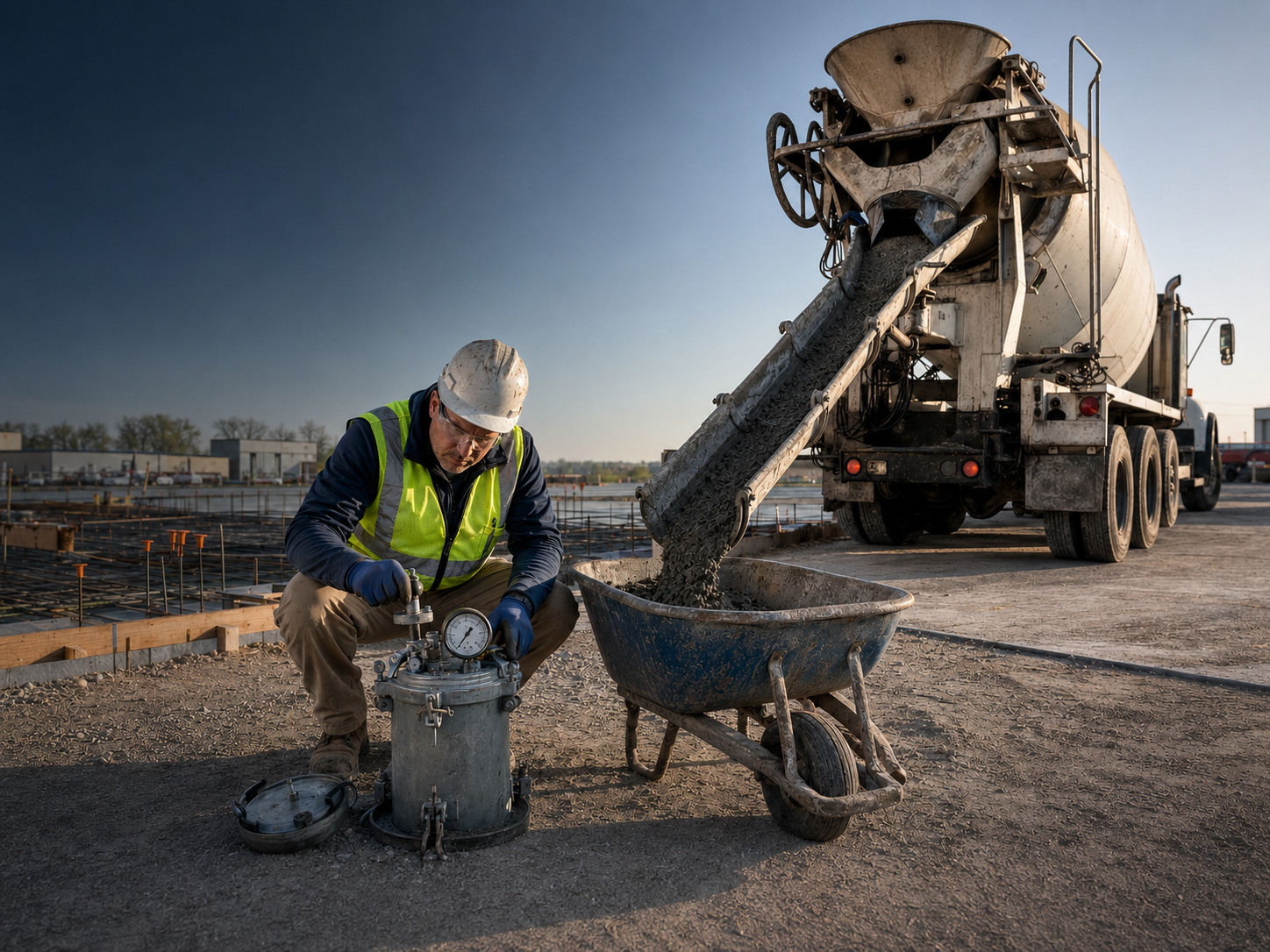
The concrete will never freeze. But don’t worry, we tested the air anyway.
Let me ask you a simple question.
If the concrete is not exposed to freezing and thawing, why are we putting air in it?
That question came up during my conversation with Dr. Bruno Fong Martinez on Episode #163 of the Concrete Logic Podcast.
Bruno is Baker Construction’s resident concrete materials expert. He has a PhD focused on concrete durability, helps troubleshoot concrete problems, and serves on ACI and ASTM committees.
He also believes unnecessary air entrainment may be one of the easiest concrete problems we could fix.
The problem is that we keep specifying it anyway.
Air entrainment is not the enemy
Let’s clear this up first.
Bruno is not arguing that we should eliminate air entrainment from concrete.
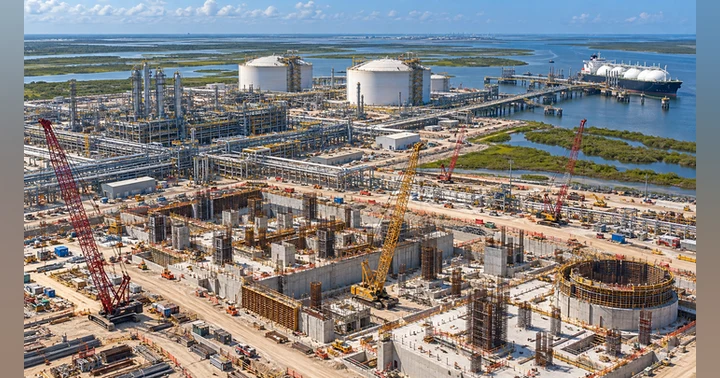
If your concrete will be exposed to repeated freezing and thawing while it is wet, air entrainment can be critical to its durability.
Water enters the pores in the concrete. When that water freezes, it expands. Properly spaced microscopic air voids give that expanding water somewhere to go.
Without those voids, repeated freezing and thawing can damage the concrete.
That is the basic idea.
The problem starts when we take something that works in one environment and specify it everywhere.
Entrapped air and entrained air are not the same thing
All concrete contains some air.
When concrete is mixed, it naturally traps air inside the mixture. This is called entrapped air. These air pockets tend to be larger and less evenly distributed.
That is one reason we consolidate concrete. We want to remove the larger unwanted voids that can weaken the concrete and leave honeycombing.
Entrained air is different.
An air-entraining admixture helps stabilize thousands of much smaller bubbles throughout the concrete. Those tiny, closely spaced voids are what provide freeze-thaw protection.
Think of the difference this way.
One large hole in the concrete does not do you much good.
Thousands of tiny, properly distributed voids can.
But those voids still take up space. Once you intentionally increase the amount of air in the concrete, other properties begin to change.
One box on the specification creates a pile of problems
To an engineer reviewing a specification, air entrainment may look like one more durability box to check.
To the producer and contractor, it is not that simple.
The producer now needs another admixture. The dosage must be controlled. The concrete must be tested. The air has to remain within the specified range while the truck travels to the project, waits on the job, and discharges.
Then the concrete may have to go through a pump.
Air content can change during all of this.
The truck may leave the plant within tolerance and arrive outside it. The concrete may pass an air test at the truck and lose air through the pump. If testing is required at the point of placement, the producer may increase the air at the plant to compensate.
Now everyone is chasing a moving target.
And if the test result falls outside the specification?
The truck may get rejected.
Not because the concrete cannot perform.
Not because the structure is unsafe.
Because the concrete missed an air requirement that may not have been necessary in the first place.
The contractor gets stuck with the consequences
Air does more than complicate acceptance testing.
It affects strength.
Bruno pointed to a commonly used rule of thumb: each additional 1% of air can reduce compressive strength by roughly 5%.
That does not mean every mixture will respond exactly the same way. But the relationship is real. More air generally means less strength.
How do we make up for the lost strength?
Often, we add more cementitious material.
Now the “durability requirement” may lead to:
-
More cement in the mixture
-
More heat in mass concrete
-
More difficulty controlling thermal cracking
-
More supplementary cementitious material to manage the heat
-
Slower strength development
-
More admixture interactions
-
More testing
-
More rejected concrete
We started with one line in the specification.
Now the producer is adjusting the mixture, the contractor is fighting the placement, and everyone is sweating the strength breaks.
What problem were we solving again?
Concrete is not a menu
This may be the bigger issue.
Concrete is often treated like a menu.
Give me this strength.
Give me this slump.
Give me this air content.
Give me this water-cement ratio.
Give me this supplementary cementitious material percentage.
Give me this service life.
Every requirement may look reasonable by itself. That does not mean they all work well together.
Concrete materials do not care how neatly the requirements fit into a specification. At some point, those requirements start fighting each other.
You cannot keep checking boxes and assume the producer will somehow make it all work.
The specification may have come from somewhere else
Why does unnecessary air get specified?
Sometimes the answer is not very scientific.
Copy and paste.
A design firm develops specifications for a project in Michigan. Later, someone uses the same language for a project in Louisiana, West Texas, or Hawaii.
The air requirement follows the document even though the climate did not.
Nobody stops to ask whether the concrete will experience enough freezing, thawing, and moisture exposure to justify it.
The requirement was used before. It feels safe. Removing it feels like taking a risk.
So it stays.
The irony is that keeping an unnecessary requirement creates different risks. Low strength, rejected loads, added cement, placement problems, testing disputes, and waste are not imaginary problems.
They happen on actual projects.
“Exterior concrete” does not answer the question
We have trained ourselves to think:
Exterior concrete equals air entrainment.
That shortcut is easy, but it skips the real questions.
Will the concrete freeze?
Will it be wet or saturated when it freezes?
How frequently will it cycle between freezing and thawing?
What is the actual exposure condition at this project?
Bruno used a red-light, yellow-light, green-light comparison.
Some environments are clearly red. Severe freeze-thaw exposure means the concrete needs protection.
Some are clearly green. The exposure is negligible, so intentionally entraining additional air may provide no meaningful benefit.
The yellow areas are harder. A state can have very different exposure conditions from one end to the other. Elevation, precipitation, drainage, saturation, and temperature cycles all matter.
That is where we need better project-specific thinking.
“Exterior” is a location.
It is not an exposure analysis.
What should you do when you see air in the specification?
Ask the question early.
Do not wait until concrete is being batched or the first truck is sitting at the pump.
If the exposure does not appear to justify air entrainment, send an RFI. Ask the engineer to confirm why it is required. Document the discussion.
Bruno described a project in Louisiana where his team questioned the air requirement. The client agreed to remove it.
That was one small specification change.
But consider what it potentially avoided: additional cement, air-related rejections, strength problems, admixture complications, and unnecessary waste.
The best concrete problem is the one you remove before the first truck leaves the plant.
Stop asking whether the concrete passed
Start by asking whether the requirement made sense.
Air entrainment is an important durability tool when the exposure calls for it. That does not make it a free insurance policy for every exterior placement.
There is a cost.
The producer pays for it through mixture complexity, testing, and rejected loads.
The contractor pays for it through pumping, placement, strength, and schedule problems.
The owner may eventually pay for all of it.
So the next time you see an air requirement, do not automatically accept it and do not automatically remove it.
Ask the obvious question:
What are we protecting this concrete from?
If nobody has a good answer, maybe that requirement should not be there.
Listen to Episode #163 of the Concrete Logic Podcast for my full conversation with Dr. Bruno Fong Martinez about where air entrainment belongs, where it may not, and why one unnecessary requirement can cause problems all the way from the batch plant to the finished structure.
#letskeepitconcrete

Editor-in-Chief, Concrete Logic
Seth Tandett is based in Richmond, Virginia, and has spent years working in the concrete construction industry across central and southern Virginia. His experience includes structural concrete work on multi-level frames, data centers, federal facilities, and other large-scale projects.
Today, Seth works in business development for Baker Construction and hosts the Concrete Logic Podcast, where he asks direct questions about what is really happening in the concrete industry.
Outside of work, Seth spends time studying economics, reading American history, and hunting waterfowl.
On the Concrete Logic Podcast, Seth brings the same approach he uses in the field: ask better questions, challenge weak answers, and focus on what actually matters in concrete.
Are We Reducing Concrete's Carbon Footprint or Just Moving It Somewhere Else?